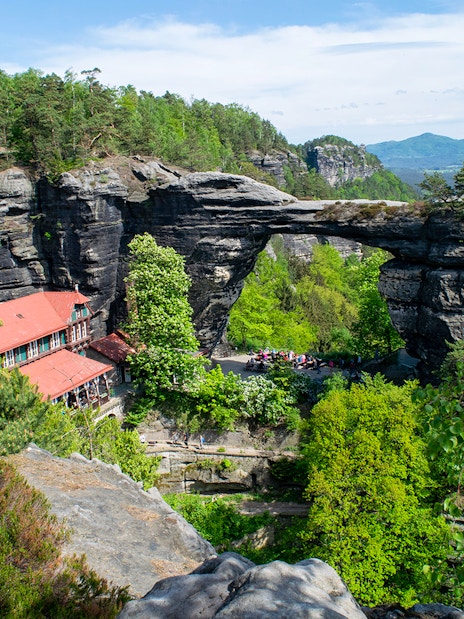
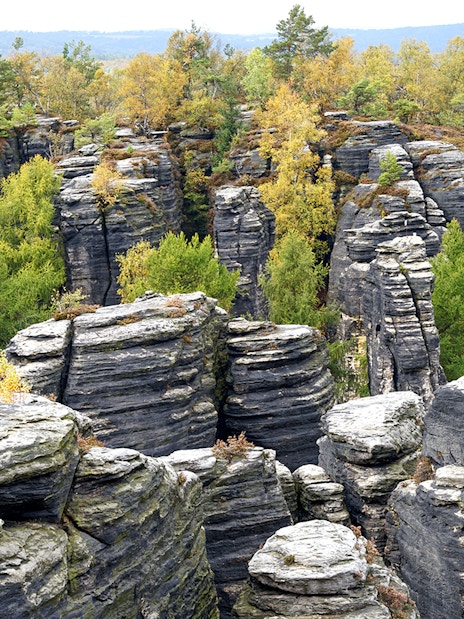
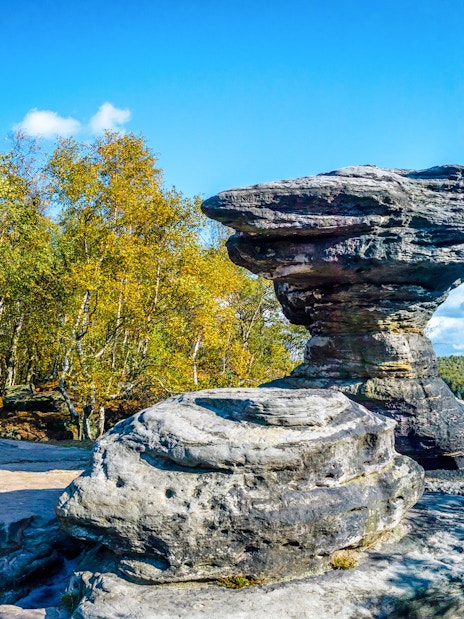
Bastei Bridge clings to sheer sandstone cliffs like something imagined rather than built. First constructed in the 19th century to connect lookout points, it became an icon of Saxon Switzerland’s wild beauty. Long before tourists arrived, these rock towers fueled legends of hidden strongholds and untamed frontiers.

Where is it located

The bridge stands high above the Elbe River in Saxon Switzerland National Park, near the town of Rathen in eastern Germany. The bridge spans a dramatic rock formation, overlooking deep valleys, jagged cliffs, and the winding river far below.

How to access

You usually visit Bastei Bridge as part of a Bohemian–Saxon Switzerland combo day tour from Prague. These guided tours manage cross-border travel and include direct access to the viewpoints, making it the easiest way to experience the bridge without navigating regional transport.

Things to know before booking tickets to Bastei Bridge

  • Bastei Bridge is most easily visited on a Saxon Switzerland or Bohemian–Saxon Switzerland day tour from Prague, which takes care of cross-border travel and brings you close to the main viewpoints without navigating regional buses or train connections.
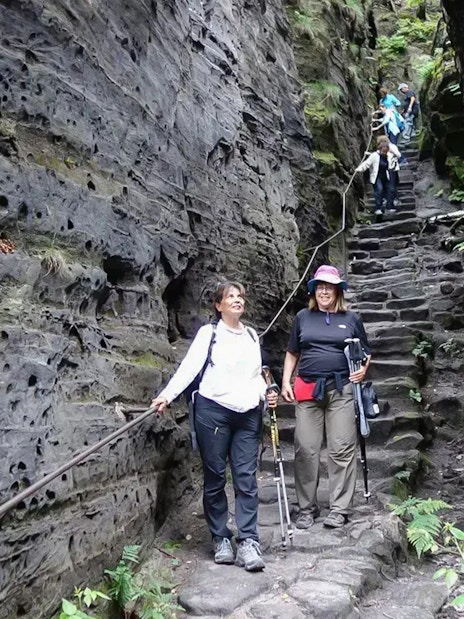
  • The route is not wheelchair accessible and may be challenging for visitors with limited mobility, as it involves stairs, uneven stone paths, and railings built into the rock formations. Walking distances are short, but paths include narrow walkways and exposed cliff-edge sections that require steady footing.
  • Clear conditions offer sweeping views over the Elbe River and sandstone cliffs, while fog or rain can reduce visibility and make paths slippery. For the best views, plan your visit between May and September, with late spring and early autumn offering the most stable conditions.

Why Bastei Bridge deserves a spot on your Prague itinerary

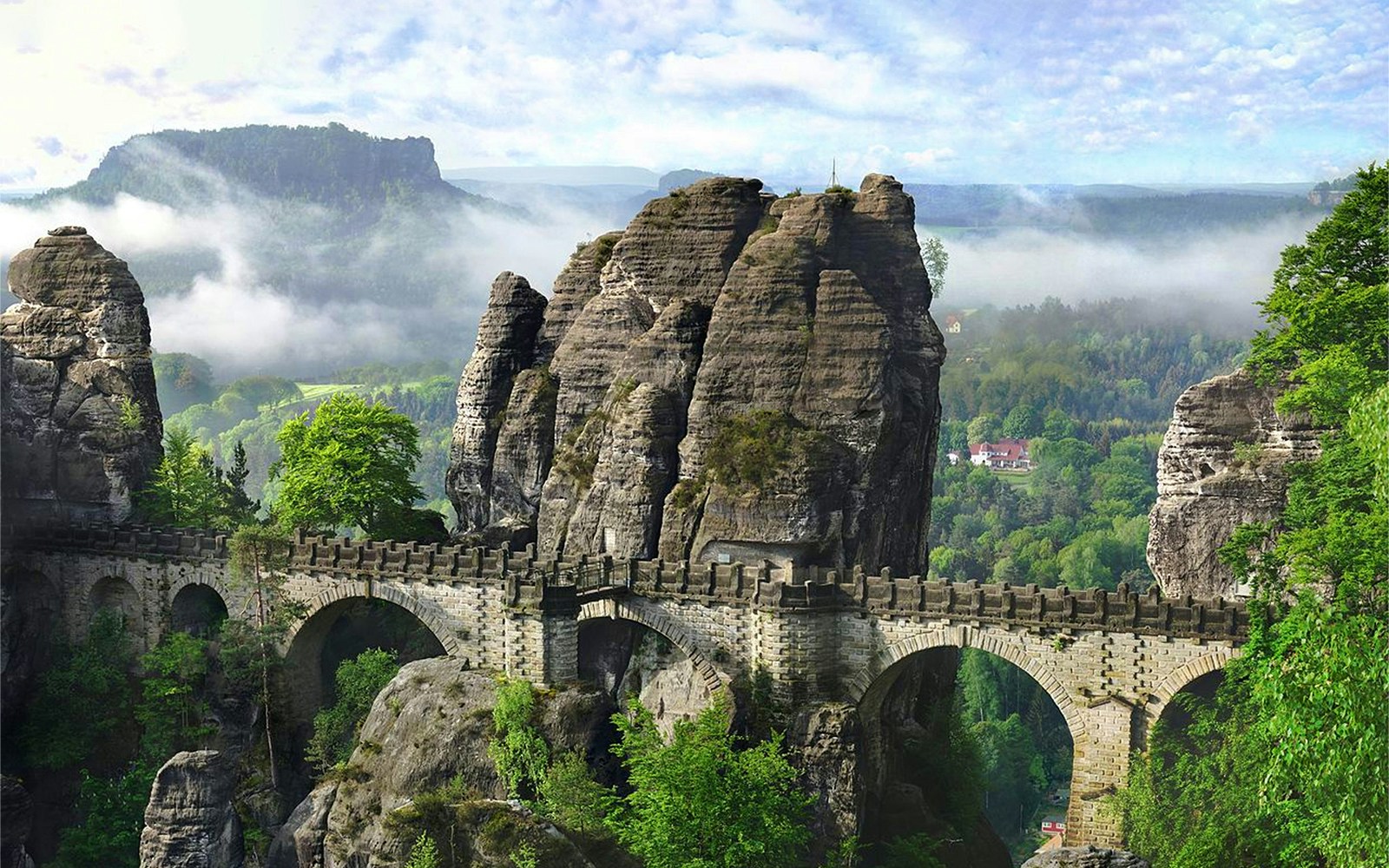
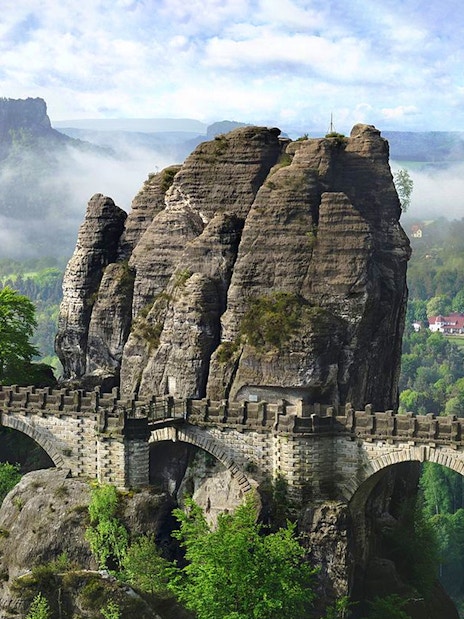
Bastei Bridge spanning rock formations in Saxon Switzerland, Germany, with lush greenery.
Placeholder Image Headout Blimp
1/5

A bridge suspended among stone towers

Set dramatically between towering sandstone formations, Bastei Bridge feels carved into the cliffs themselves, offering a viewpoint that’s both architectural and natural.

Unmatched views over the Elbe River

From the bridge and surrounding platforms, sweeping panoramas open over the Elbe Valley, with layered rock formations stretching far into the horizon.

Easy to experience in a single stop

Unlike longer hiking routes, Bastei is designed around short walking paths and defined viewpoints, making it accessible within a structured day tour.

A highlight of Saxon Switzerland

Often considered the park’s most iconic landmark, the bridge delivers the most concentrated 'wow' moment of the entire Saxon Switzerland region.

A striking contrast to city sightseeing

After exploring castles and cobbled streets, standing on a cliffside bridge above a river gorge offers a completely different kind of perspective on Central Europe.

Iconic views from Bastei Bridge you cannot miss

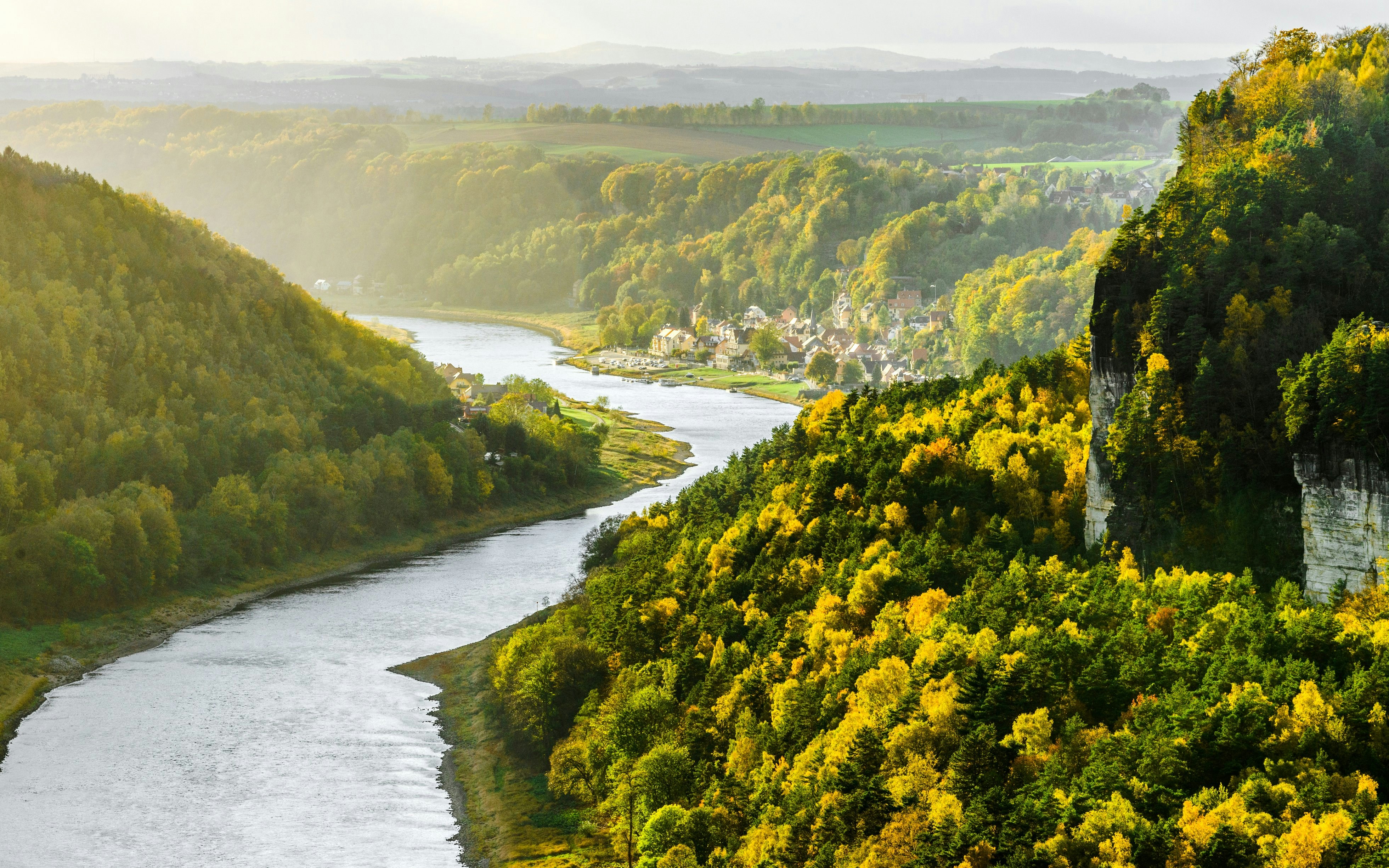
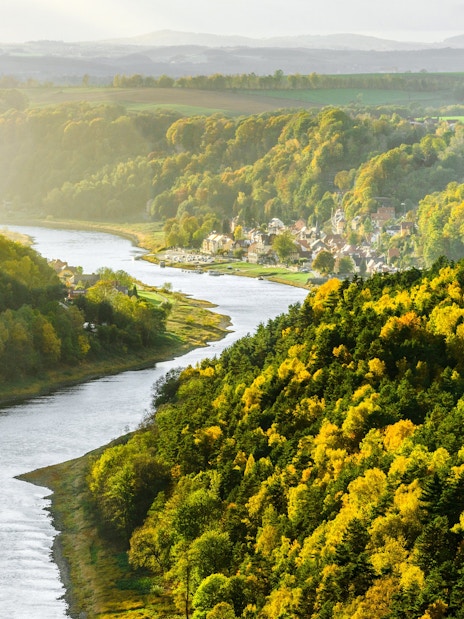
Elbe River winding through lush green hills from Bastei Bridge, Germany.

The Elbe River bend

From the bridge’s edge, the Elbe curves dramatically through the valley below, its silver ribbon cutting between forested slopes and distant sandstone cliffs.

Placeholder Image Headout Blimp

Key architectural highlights

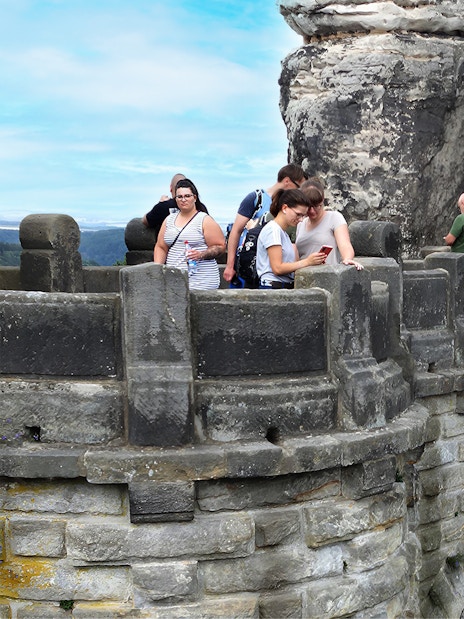
  • The 19th-century sandstone construction blends seamlessly with the surrounding cliffs, replacing an earlier wooden bridge in 1851 and creating a durable structure that appears carved directly from the rock formations.
  • Its seven graceful stone arches span deep rock fissures, engineering a stable passageway across rugged terrain while preserving the dramatic vertical drops beneath.
  • The integration with Neurathen Rock Castle ruins adds medieval context, as the bridge connects directly to the remains of the former fortress built into the sandstone towers.
  • The elevated viewing platforms extend beyond the main walkway, allowing visitors to step out toward panoramic overlooks without interrupting the flow of foot traffic.
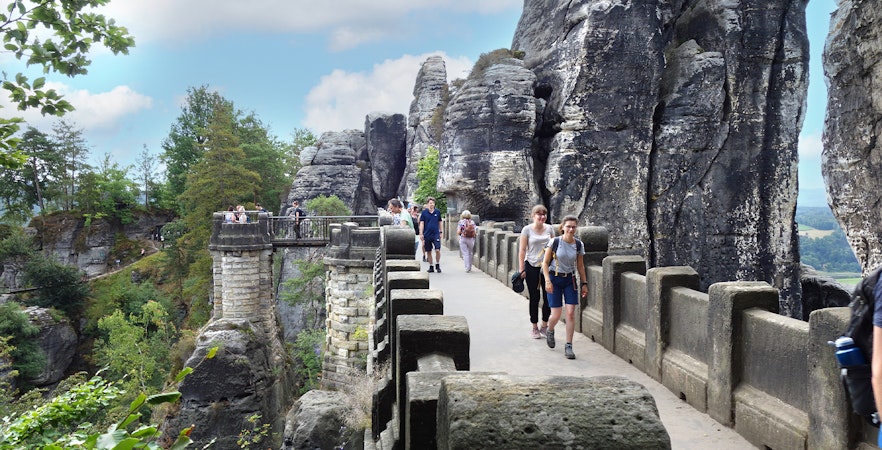
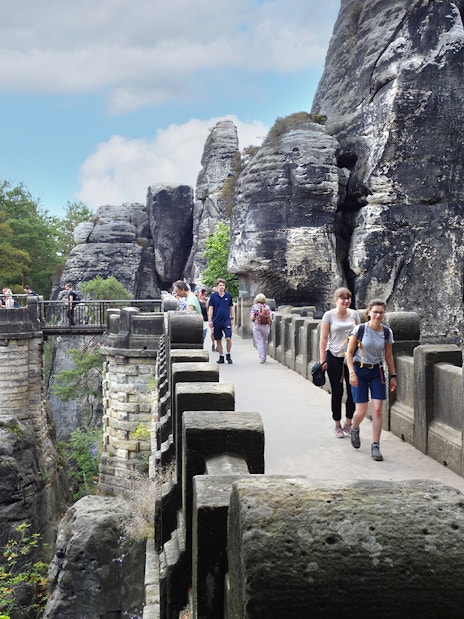
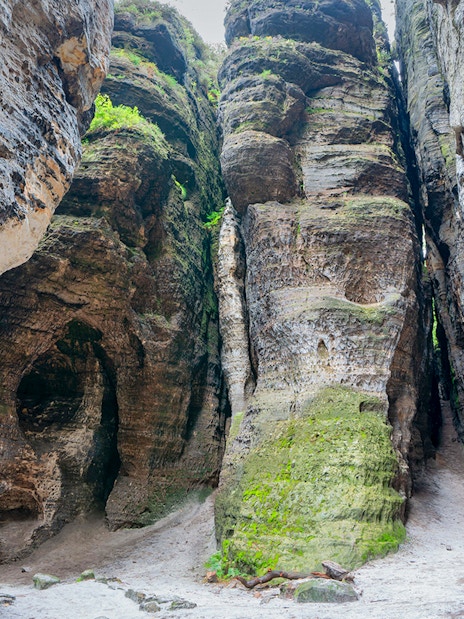
  • The bridge’s narrow stone pathway enhances the sense of height and exposure, intentionally framing views through natural rock corridors and emphasizing the dramatic landscape.
  • Railings embedded into the stone provide safety without overpowering the design, maintaining the balance between structural integrity and unobstructed scenic views.

A journey through Bastei Bridge’s history

Bastei’s cliffs first drew attention in the late 18th century, when Romantic artists and writers began exploring the Elbe Sandstone Mountains in search of dramatic, untamed landscapes. What started as a natural viewpoint soon evolved into a cultural landmark, as early visitors carved paths and constructed simple wooden walkways to access the rock formations. In 1851, the current sandstone bridge replaced the earlier wooden structure, transforming the site into a permanent architectural feature within the wild terrain.

Adjacent to the bridge lie the remains of Neurathen Rock Castle, a medieval fortress built directly into the sandstone towers, reflecting the region’s former strategic importance along the Elbe corridor. Over time, Bastei became one of the defining symbols of Saxon Switzerland, representing the intersection of Romantic-era landscape appreciation, 19th-century engineering, and modern conservation. Today, it stands not just as a scenic viewpoint but as a cultural monument shaped by centuries of fascination with nature’s grandeur.

More reads

Bohemian Switzerland National Park day tours

Visit Bohemian Switzerland National Park

Plan your visit to Bohemian Switzerland