About an hour north of Prague, Terezín stands as one of the most significant Holocaust memorial sites in Central Europe, once used by the Nazis as a Jewish ghetto and political prison during World War II. Visits here are somber and deeply moving, with the Small Fortress, Ghetto Museum, and former barracks offering powerful insight into the lives of those who were imprisoned. A guided day tour helps you navigate these sites with context, ensuring you understand the history and stories behind Terezín without worrying about transport, entry logistics, or the complex layout on your own.
Distance from Prague: Approximately 65km north of Prague
Typical travel time: 45 minutes to 1 hour each way by bus or van
On-site visit duration: Typically 3 to 4 hours, depending on the tour route and museum access
Cost range: €45 to €95, depending on entry to the Small Fortress, Ghetto Museum, and audio or live-guided tours
Best time to visit: Year-round, with March to May and September to October offering comfortable walking conditions
Meeting/drop-off point: Na Příkopě or Prague’s City Center, with hotel pick-up available on small-group tours
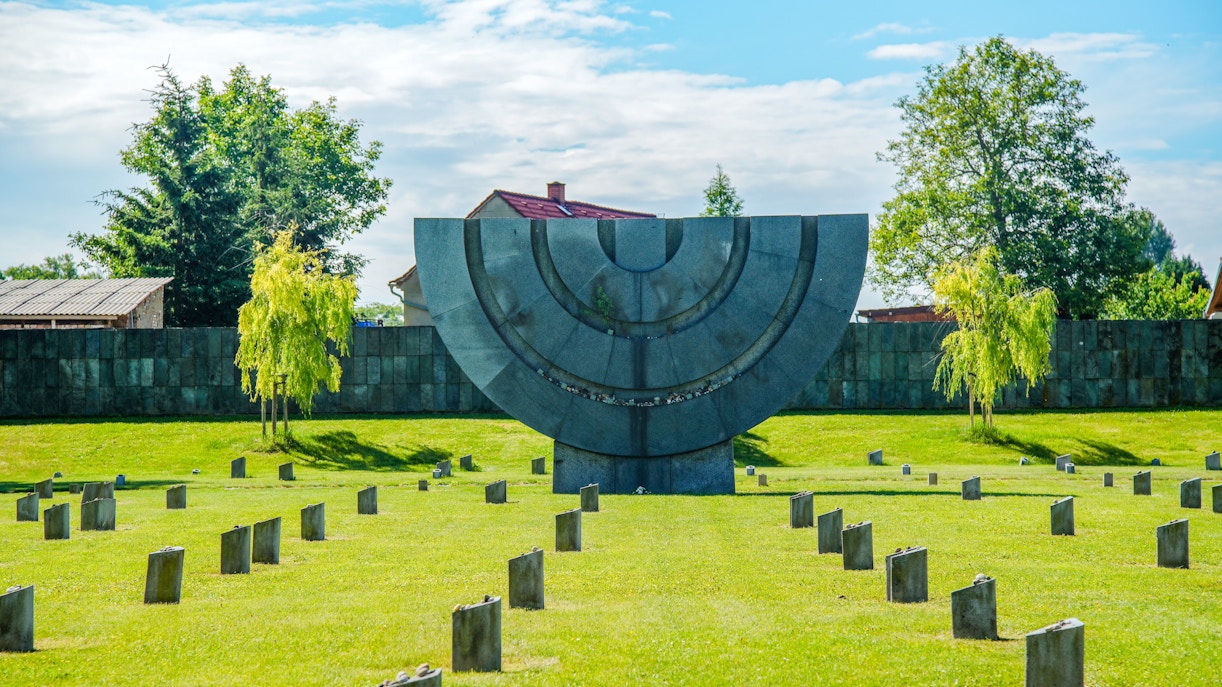
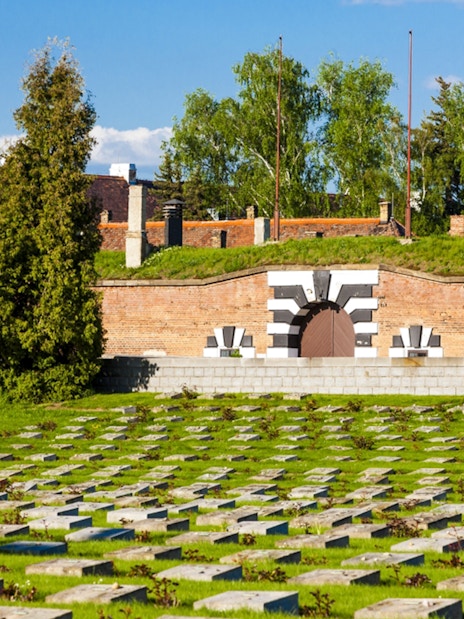
Key attractions: Small Fortress (Gestapo prison), Ghetto Museum, Large Fortress, Magdeburg Barracks, Jewish Cemetery, and more
Recommended tour:From Prague: Terezín Concentration Camp day trip
What to expect on a day trip to Terezín Concentration Camp from Prague?
1/6
Seamless transfers from Prague
All tours begin with round-trip transfers in an air-conditioned bus or minivan, taking about an hour to reach the Terezín Memorial. The route is straightforward and brings you directly to the Small Fortress, avoiding the multi-step public transport connections required to reach the site on your own.
Expert insights into one of Europe’s most significant WWII sites
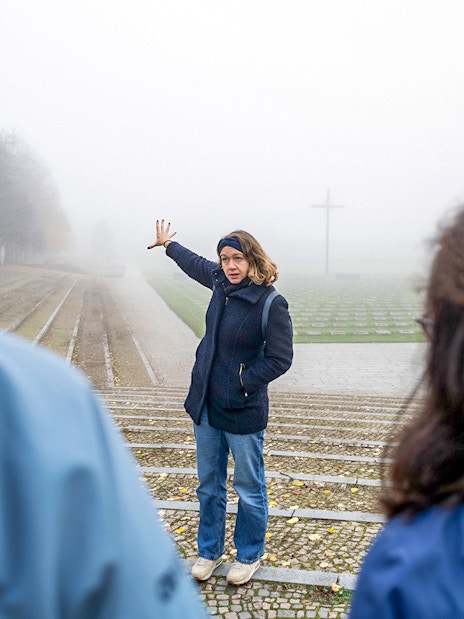
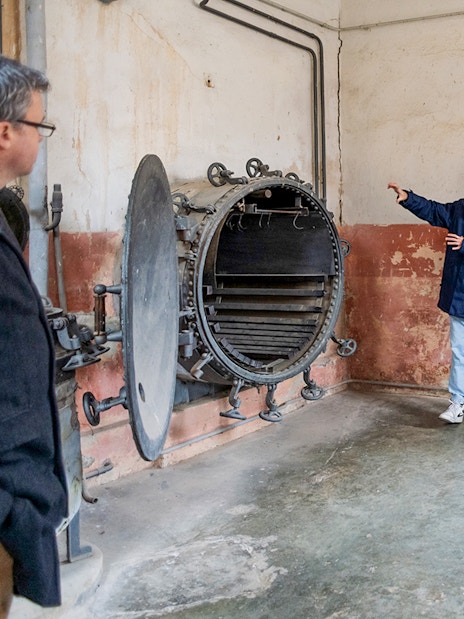
Your guide begins with an overview of Terezín’s history as a Nazi-run ghetto and political prison, explaining the purpose behind each site, from the crematorium and columbarium to the propaganda films created by the Nazis. The structured order ensures you visit the most important sections in the correct sequence without having to navigate the complex layout on your own.
A visit to the Small Fortress and its prison blocks
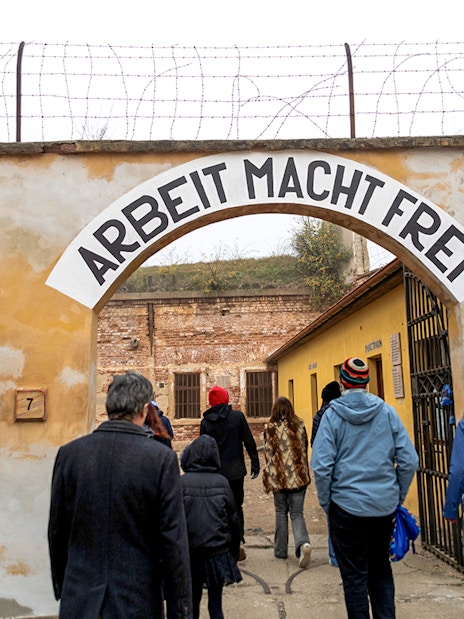
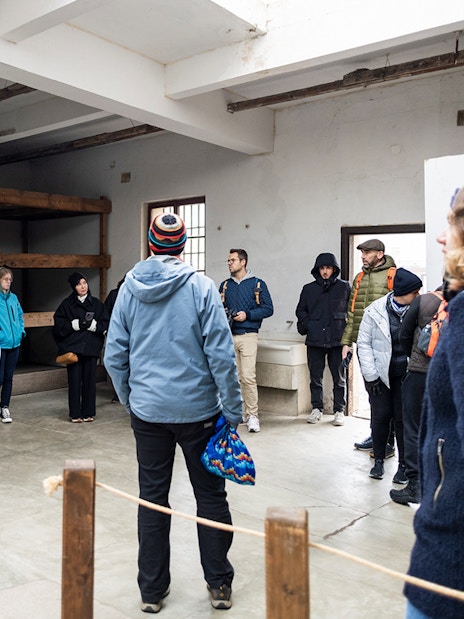
The tour walks through former cells, courtyards, interrogation rooms, and the Gestapo prison section, with explanations about daily life under imprisonment. Your guide shares stories of political prisoners, escape attempts, and the harsh conditions that defined the camp.
Insights into the ghetto’s cultural history
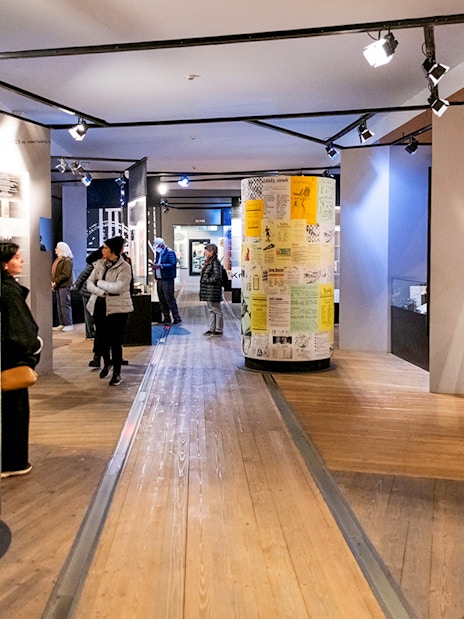
At the Ghetto Museum, you learn about the Jewish community imprisoned in Terezín, including children’s drawings, personal letters, and accounts of the musicians, teachers, and artists who attempted to preserve culture under oppression. Exhibits highlight the contrast between Nazi propaganda and the reality of life inside the ghetto.
Audio guides in multiple languages
Select tour options include audio guides, helpful for travelers who prefer slower, reflective pacing inside the Ghetto Museum or specific exhibition halls. The audio commentary adds detail about personal testimonies and archival materials.
A somber, well-paced return to Prague
Once the tour concludes, the group meets at the designated point for the drive back to Prague. Most tours return by evening, giving travelers time to decompress after a powerful and emotionally heavy visit.
Things to know before booking a Prague to Terezín Memorial day tour
All Terezín day tours include round-trip transfers from Prague, taking about 1 hour each way and saving you from piecing together the train-and-bus connections required to reach the former garrison town.
Tours typically depart from central Prague meeting points such as Na Příkopě, and some itineraries use air-conditioned coaches for a more comfortable ride before the site visit.
Terezín includes several separate sites, such as the Small Fortress, the Ghetto Museum, former barracks, and memorial areas, which can be difficult to navigate on your own. A guided tourconnects them in the right sequence and offers important historical context along the way.
Entry to the Small Fortress is included in most Terezín tours, giving you structured access to former prison cells, corridors, courtyards, and memorial rooms without waiting at ticket counters. Guides explain the building’s role as a Gestapo prison and share stories that help you understand the experiences of those held there.
Many tours also include entry to the Ghetto Museum, where exhibits, personal testimonies, and archival materials help explain the daily life of Jewish prisoners in the town.
Audio guides are available in multiple languages on some itineraries, which is helpful if you prefer to explore parts of the museum at your own pace while still getting accurate historical information.
Terezín is not wheelchair accessible, as the site includes steps, uneven surfaces, and cobblestones throughout the fortress grounds.
Focused insight into the prison section with multilingual audio
Light to moderate walking inside the fortress
Ticket to Kingdom of Railways
A visit paced with care & consideration
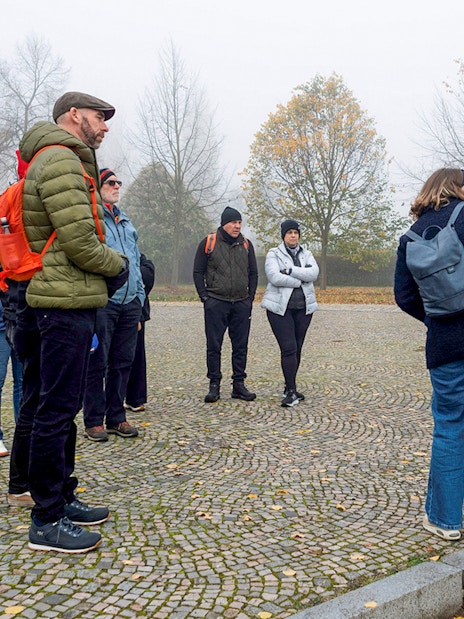
Tours move through the site at a considered pace, pairing guided explanations with quiet moments to process what you are seeing so the experience feels supportive rather than rushed.
Faint traces of prisoner-painted symbols and markings still cling to inner courtyard walls, offering understated glimpses of daily life.
Where is it: Around the residential blocks behind the Magdeburg Barracks; visible during courtyard access on foot.
Memorial of the Children of Terezín
A simple yet deeply moving outdoor sculpture honoring the 15,000 Jewish children imprisoned here, most of whom were later transported to Auschwitz.
Where is it: On the lawn near the Ghetto Museum, directly on the standard walking loop.
Military moat paths (historic fortification trenches)
Long, grass-lined channels originally built as 18th-century defensive moats, now forming reflective walking paths around the fortress.
Where is it: Encircling the Small Fortress and parts of the ghetto fortification walls.
Autopsy Room
A stark utilitarian building where prisoner physicians were forced to perform autopsies under strict Nazi supervision.
Where is it: Behind the Ghetto Hospital area; accessible as part of the broader ghetto grounds.
Former Sokol Gym (Cultural Hall exterior)
A pre-war Czech gymnasium later repurposed by the Nazis, silently reflecting how ordinary civic spaces were absorbed into the camp structure.
Where is it: Near the southern entrance of the ghetto, a short walk from the main square.
Your 1-day Prague to Terezín Concentration Camp itinerary
8:30am to 9:30am: Begin your day with a direct transfer from Na Příkopě for the hour-long drive to Terezín.
9:30am to 10:45am: Your first stop is the Small Fortress, once controlled by the Gestapo. Walk through the courtyards, cells, isolation units, and execution grounds as your guide shares stories on prisoner life and how the site functioned within the wider camp system.
10:45am to 11am: A short transfer brings you into the former Jewish Ghetto of Terezín, where daily life unfolded under overcrowded and oppressive conditions.
11am to 12:15pm: Explore the museum’s exhibitions documenting the cultural life, children’s drawings, personal testimonies, and deportation history of the people imprisoned here.
12:15pm to 1pm: Depending on your tour, you may visit locations such as the Magdeburg Barracks, prayer rooms, courtyards used for forced labor, or commemorative plaques honoring the victims.
1pm to 1:45pm: Most tours include free time for a simple lunch at a nearby café or designated rest stop. This pause gives you space to reflect before continuing the visit.
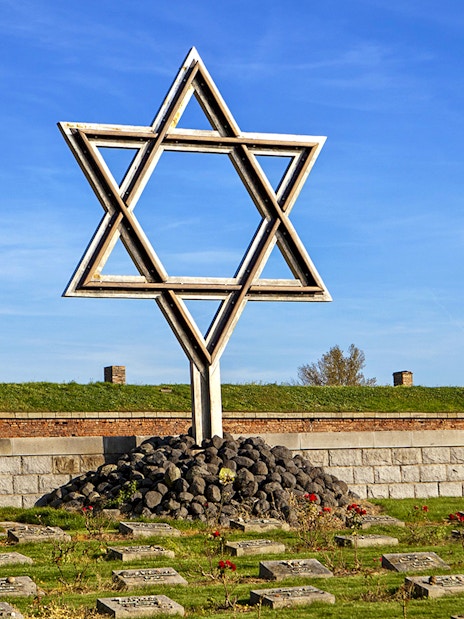
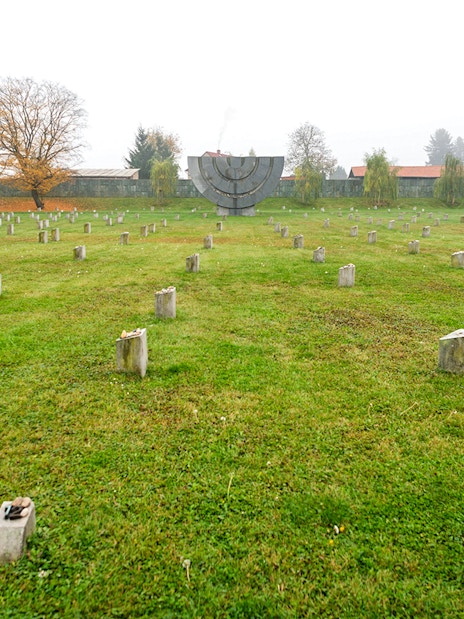
1:45pm to 2:45pm: Tours often conclude with visits to cemeteries, crematorium grounds, or additional exhibition rooms, depending on seasonal opening hours. These final stops help round out your understanding of Terezín’s role within the wider Holocaust.
2:45pm to 3:45pm: Meet your group for the direct drive back to Prague, with most tours returning by early evening, so you have time to unwind and process the experience.
Best time to visit Terezín Memorial
Weather: The most comfortable time to visit Terezín is spring (April to June) and autumn (September to October), when temperatures are mild, and conditions are suitable for walking between the Ghetto Museum, the Small Fortress, and the historical sites spread across town. These seasons also provide steady weather, which helps with outdoor portions of the visit.
Events: May hosts remembrance ceremonies connected to the liberation of the camp, and these offer a meaningful context for visitors interested in historical reflection. Occasional concerts, exhibitions, and educational programs take place throughout the year, often linked to the Terezín Memorial’s cultural initiatives.
Crowds: Crowds are moderate throughout most of the year, although school groups and organised tours create heavier visitor traffic in April to June and September to October. Mid-summer and the winter months are generally quieter, with fewer group visits and more space at key exhibitions and memorial areas.
Getting to Terezín Concentration Camp | Travel options from Prague
The easiest and most popular way to visit Terezín, round-trip transfers provide direct, air-conditioned travel from Prague to both the Small Fortress and the Ghetto Museum, removing the need to navigate local bus stops or connections.
Hotel pickup or central meeting points ensure a smooth start to your day, especially for first-time visitors.
Easy online booking secures your place in advance and guarantees that your timing aligns with museum hours and guided tour slots inside the memorial.
Professional guides or driver-guides provide essential historical context, helping you understand the significance of the memorial before you arrive.
This option is ideal for travelers seeking a respectful, educational, and stress-free experience, without worrying about bus transfers or infrequent return timetables.
Compared to DIY travel, transfers are faster, more reliable, and require zero planning, allowing you to focus fully on the site’s history and remembrance.
Time: About 50 minutes to 1 hour each way Cost: €59 to €65, depending on tour inclusions Recommended tour:From Prague: Terezín Concentration Camp day trip
There is no direct train to Terezín; travelers must combine a train to Litoměřice with a local bus or taxi.
Trains are best for travelers who prefer the comfort of rail travel and don’t mind arranging the last-mile connection.
The train ride to Litoměřice takes 50 to 60 minutes, followed by a 10 to 15-minute bus or taxi to Terezín.
Costs typically total €5 to €10 one way, depending on connections.
Pros: Comfortable, scenic ride with frequent departures to Litoměřice.
Cons: Not direct, requires a transfer, and return connections may be less frequent in the late afternoon.
The most common public transport option with direct buses from Prague to Terezín, leaving several times a day.
Buses are best for budget-conscious travelers who want a direct, affordable route from Prague to Terezín.
Travel time is typically 55 to 70 minutes from Prague’s Holešovice station to Terezín.
Tickets cost around €4 to €6 one way.
Pros: Direct services, inexpensive tickets, relatively frequent departures.
Cons: Buses may stop in different parts of Terezín, meaning you may need to walk between memorial sites; schedules can be limited on weekends or holidays.
Driving provides flexibility, especially if you want to visit several parts of the memorial in one trip.
Self-driving is best for travelers who want full control over their timing and may wish to explore both the fortress and the town’s museums at their own pace.
The drive takes 50 minutes to 1 hour, mostly on major roads.
Costs include car rental (€40+ per day) and fuel (€10 to €15); parking near the Small Fortress is free or very low-cost.
Pros: Maximum flexibility, quickest travel time, and easy access to all sections of the memorial.
Cons: Requires navigating local roads, and some parts of the memorial area have limited parking during peak visiting hours.
A comfortable, small-group alternative to public buses, offering convenience without the cost of a private transfer.
Shared shuttles are best for solo travelers or couples who want an easier journey without paying a premium for private tours.
Travel time is about 50 to 60 minutes.
Prices usually range from €12 to €25 one way.
Pros: Small groups, air-conditioned comfort, and convenient drop-offs close to the main memorial entrances.
Cons: Limited daily departures, often seasonal, and more expensive than the public bus.
Helpful tips for a meaningful visit to Terezín Concentration Camp
Wear comfortable shoes because the memorial grounds, courtyards, and former barracks involve a lot of uneven walking.
Bring a small amount of cash because some donation boxes and local cafés do not accept cards.
Carry a light jacket because the interiors of the Small Fortress and some museum rooms feel noticeably colder than outside.
Bring a reusable water bottle because the walking sections between sites have very few shops or vending machines.
Eat a light meal before leaving Prague because food options in Terezín are limited and many close early.
Use the restrooms at the beginning of the visit because facilities are sparse once you move deeper into the memorial grounds.
Prepare yourself for emotional content because some exhibitions display difficult testimonies and artifacts that may feel heavy.
Follow your guide closely between buildings because the complex layout includes multiple courtyards and corridors that are easy to lose track of.
Step off the main paths briefly to see the perimeter walls, an often-missed part of the fortress that adds valuable historical context.
Give yourself a few moments after the visit to decompress because the historical weight of the site can feel overwhelming.
Frequently asked questions about Prague to Terezín Concentration Camp tours
Most Terezín day tours last 5 to 6 hours, including the 1-hour transfer from Prague and guided visits to the Small Fortress, Ghetto Museum, and surrounding memorial sites.
Depending on the Terezín day tours you book, explore** the Small Fortress** and the Ghetto Museum, with additional stops at former barracks, courtyards, and memorial sites.
Tours typically depart from central locations such as Na Příkopě, with select itineraries offering transport in air-conditioned buses or vans.
We recommend a guided day tour of the Terezín Memorial, as a guide connects the various sites into a coherent narrative that explains the camp’s World War II role, the experiences of those imprisoned there, and its function as both a ghetto and a propaganda tool.
Yes, the tour can feel emotionally heavy, as Terezín’s history, including its role as a wartime ghetto and transit camp, the stories of suffering and survival, and the preserved spaces where these events unfolded, creates a deeply somber and reflective experience that you should be prepared for.
Expect moderate walking through courtyards, long corridors, and outdoor areas with uneven surfaces, which can be tiring for some visitors.
The cobblestones, steps, slopes, and narrow passageways within the fortress complex make the tour unsuitable for wheelchair users.
Photography is permitted in most outdoor areas, but some rooms and exhibitions have restrictions, so be sure to follow the posted signage near sensitive displays.
Children are allowed, but the sensitive historical content may be overwhelming for younger visitors, so parents should gauge suitability based on the child’s age and maturity.
Yes, the museum and visitor center offer books, testimonies, and educational materials for those who want to understand the history more deeply.
Terezín Concentration Camp Day Tours
Crafted by Headout, a global experiences brand offering curated tours, tickets & experiences. Discover with ease, book with peace.
4.2/5
1K+ travellers from around the world love this
The camp’s layout can be overwhelming
Guided tours lead you through the Small Fortress, Ghetto Museum, and key memorial sites in a clear order so you understand how each part connects to Terezín’s history.
A guided visit to Terezín’s memorial sites with fortress access, museum entry, & expert commentary.
Day out to Terezín from Prague with round-trip AC bus transfers, departing from Na Příkopě for an easy touring experience.
You’ll get an expert English, Spanish, German, or Italian-speaking guide leading your visit across the Terezín memorial complex.
Large Fortress: Walk through the former military stronghold and learn how it became part of Terezín’s wartime system of control.
Small Fortress: Enter the former Gestapo prison, exploring the courtyards, cells, and passages where prisoners were held and interrogated.
Ghetto Museum: Visit the exhibition documenting the daily life, resilience, and suffering of the people imprisoned in the Terezin Ghetto.
Inclusions
#
5-hour full-day tour of Terezín Concentration Camp
Round-trip transfers from Na Příkopě in an air-conditioned bus
3-hour guided walking tour of Terezin Concentration Camp
Entry to Large Fortress
Entry to Ghetto Museum
Entry to Small Fortress (Gestapo prison)
Expert English, Spanish, German, or Italian-speaking guide (as per option selected)
Ticket to the Kingdom of Railways in Prague (can be used any time after the tour)
Exclusions
#
Hotel pick-up & drop-off
Lunch
What to bring
Carry a valid ID card, as it is required for verification before the tour begins.
Wear comfortable walking shoes, as the Terezín Memorial grounds include large outdoor areas, uneven pavement, and long corridors within the former barracks.
Bring weather-appropriate clothing, since much of the visit takes place outdoors and conditions can be windier and colder than in Prague.
What’s not allowed
Large suitcases or bulky luggage are not allowed on the tour vehicle, so guests should bring only compact personal items.
Flash photography is strictly prohibited to protect sensitive displays.
Loud conversations or disruptive behavior are discouraged, as the site is a place of reflection and remembrance.
Accessibility
This tour is not wheelchair accessible; the barracks and underground passages have uneven surfaces, steep steps, and narrow walkways, which may pose challenges for visitors with mobility limitations.
Additional information
This tour departs daily at 8:45am, so arriving 10 to 15 minutes early is recommended to allow for check-in.
The transfer from Prague to Terezin takes approximately one hour, depending on traffic conditions.
The Terezín Crematorium remains closed on Sundays.
Your guide will provide historical context throughout the tour, and certain sections of the memorial may include emotionally heavy material due to the nature of the site.
You can cancel these tickets up to 24 hours before the experience begins and get a full refund.
A powerful, guided day trip from Prague, exploring Terezín’s moving WWII history in depth.
Full day out to: the Terezín Memorial from Prague, with comfortable transfers from Namesti Republiky or Staromestske Namesti and entry to key memorial sites.
You’ll get: a 6-hour full-day tour of the Terezín Memorial, in-depth commentary from an expert English-speaking guide, a guided walking tour of the former concentration camp, entry to the Large Fortress, entry to the Ghetto Museum, and entry to the Small Fortress Gestapo prison.
Large Fortress: Walk through the massive fortifications that once housed the Terezín ghetto, learning how this military complex was repurposed and controlled during the Nazi occupation.
Ghetto Museum: Explore detailed exhibitions featuring documents, photographs, artwork, and personal testimonies that illustrate daily life, persecution, and resilience within the ghetto.
Small Fortress (Gestapo prison): Step inside the former prison to see original cells, interrogation areas, and execution sites, offering a stark look at the conditions endured by prisoners.
Inclusions
#
6-hour full-day tour of Terezín Memorial
Round-trip transfers from Namesti Republiky or Staromestske Namesti (as per option selected)
3-hour guided walking tour of Terezin Concentration Camp
Entry to Large Fortress
Entry to Ghetto Museum
Entry to Small Fortress (Gestapo prison)
Expert English-speaking guide
Exclusions
#
Hotel pick-up & drop-off
Food & drinks
What to bring
Bring a valid ID card or your passport with you, as it will be needed for verification before the tour sets off.
Wear comfortable, closed-toe shoes suitable for walking on uneven surfaces and through long corridors.
Dress in layers, as much of the tour takes place outdoors, and the weather can be cooler and windier than in Prague.
What’s not allowed
Large luggage or oversized bags are not permitted; only small personal items are allowed.
Flash photography is strictly forbidden, as it can damage sensitive exhibits.
Please refrain from speaking loudly or engaging in disruptive behavior, as the memorial is a place for quiet reflection.
Accessibility
This tour is not suitable for wheelchair users due to steep steps and narrow passageways in the barracks and underground sections.
Additional information
The drive from Prague to Terezín takes approximately one hour, depending on traffic conditions.
The Terezín Crematorium is closed on Sundays and cannot be visited on that day.
Your guide will provide detailed historical context throughout the visit. Please note that some parts of the tour may be emotionally intense due to the nature of the memorial.
You can cancel these tickets up to 24 hours before the experience begins and get a full refund.
Day Trips
From Prague: Terezín Concentration Camp Day Trip
A guided visit to Terezín’s memorial sites with fortress access, museum entry, & expert commentary.
Day out to Terezín from Prague with round-trip AC bus transfers, departing from Na Příkopě for an easy touring experience.
You’ll get an expert English, Spanish, German, or Italian-speaking guide leading your visit across the Terezín memorial complex.
Large Fortress: Walk through the former military stronghold and learn how it became part of Terezín’s wartime system of control.
Small Fortress: Enter the former Gestapo prison, exploring the courtyards, cells, and passages where prisoners were held and interrogated.
Ghetto Museum: Visit the exhibition documenting the daily life, resilience, and suffering of the people imprisoned in the Terezin Ghetto.
You can cancel these tickets up to 24 hours before the experience begins and get a full refund.
Book now, pay later
Book now without paying anything. Cancel for free if your plans change.
5 hr.
Guided tour
Transfers available
Day Trips
From Prague: Terezín Memorial Day Trip
A powerful, guided day trip from Prague, exploring Terezín’s moving WWII history in depth.
Full day out to: the Terezín Memorial from Prague, with comfortable transfers from Namesti Republiky or Staromestske Namesti and entry to key memorial sites.
You’ll get: a 6-hour full-day tour of the Terezín Memorial, in-depth commentary from an expert English-speaking guide, a guided walking tour of the former concentration camp, entry to the Large Fortress, entry to the Ghetto Museum, and entry to the Small Fortress Gestapo prison.
Large Fortress: Walk through the massive fortifications that once housed the Terezín ghetto, learning how this military complex was repurposed and controlled during the Nazi occupation.
Ghetto Museum: Explore detailed exhibitions featuring documents, photographs, artwork, and personal testimonies that illustrate daily life, persecution, and resilience within the ghetto.
Small Fortress (Gestapo prison): Step inside the former prison to see original cells, interrogation areas, and execution sites, offering a stark look at the conditions endured by prisoners.