Budget 45 minutes if you want the view and a quick look at the interiors, 75–90 minutes if you want to catch the hourly show and explore the historic rooms properly, and up to 3 hours if you join the Prague Clock Tower Guided Walking Tour.
Quick Information
ADDRESS
Staroměstské nám. 1, 110 00 Praha 1-Staré Město, Czechia
RECOMMENDED DURATION
1 hour
Timings
10:00–19:00
TICKETS
From $5.70
NUMBER OF ENTRANCES
2
Did you know?
The Orloj is mounted on the southern wall of Old Town Hall, not on a freestanding tower face.
Its upper dial is a medieval mechanical astrolabe that tracks the Sun and Moon, so the clock was designed to show astronomical information as well as time.
The Old Town Hall complex is not a single medieval building: it consists of five interconnected historic buildings.
Is the Astronomical Clock Tower worth visiting?
A few minutes before the hour, Old Town Square starts to tilt upward. Faces turn to the dial, the skeleton rings, the windows open, and then you step inside to leave the noise behind. The tower changes the experience completely: narrow halls, chapel shadows, and a sudden burst of rooftops when you reach the gallery.
The Astronomical Clock Tower was built to put civic power on display. This was Prague’s town hall announcing that the city could measure time, map the heavens, and stage public ritual in the middle of daily market life.
What stays with most visitors is not the brief apostle show but the view’s sense of orientation. From the top, Prague stops feeling scattered and starts reading like one connected medieval city, stitched together by spires, lanes, and red-tiled roofs.
Skip it if: tight viewing spaces, elevator waits, or brief attractions frustrate you more than they intrigue you.
What to see inside the Astronomical Clock Tower?
1/6
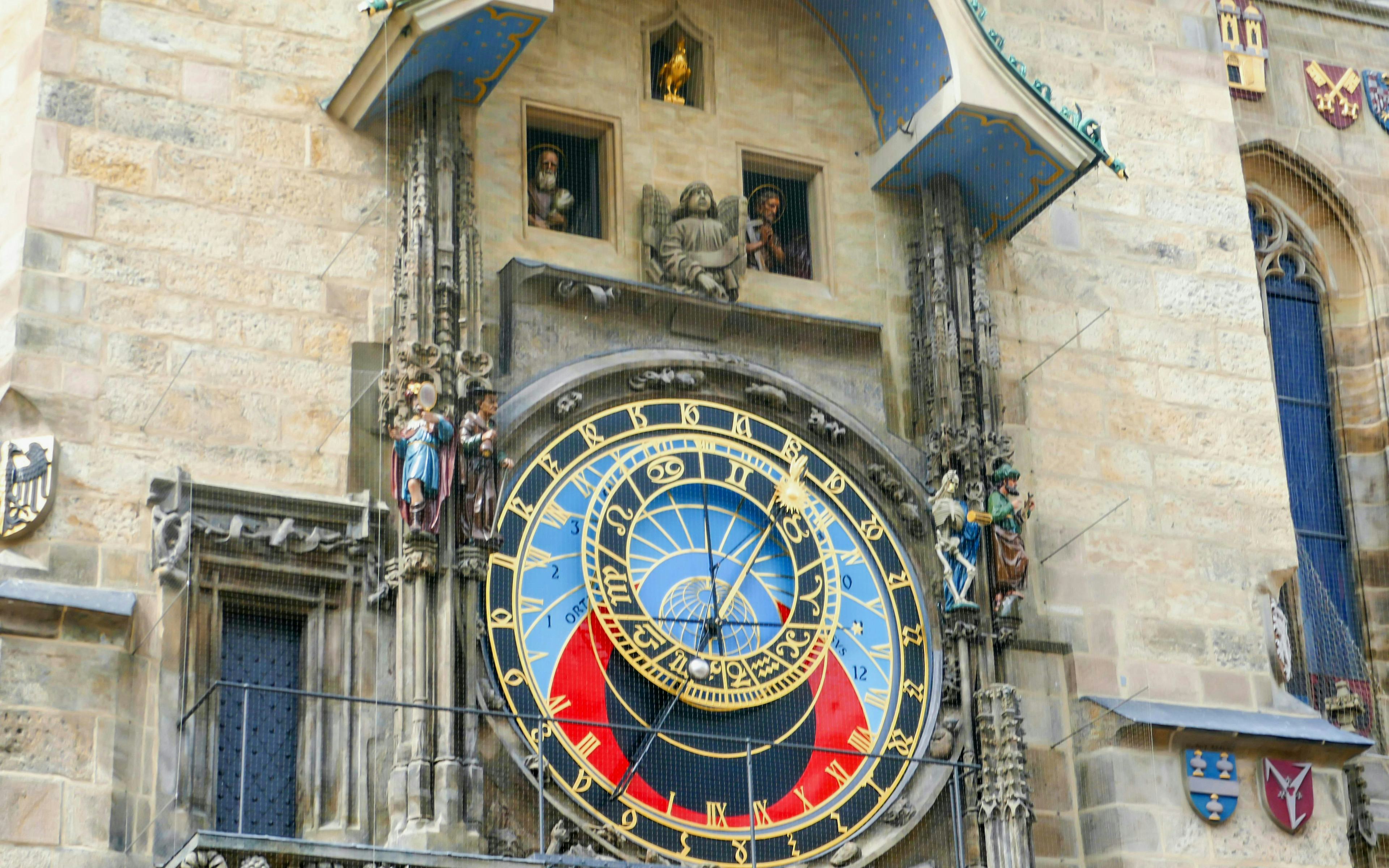
The hourly clock face
Stand in the square first to see the astronomical dial, calendar plate, and animated figures in context. The apostle procession runs every hour from 9am to 11pm, so the area thickens quickly just before the strike.
The chapel window
Inside the chapel, you can watch the apostles pass at close range instead of from the packed square below. This is the quietest way to appreciate how small and precise the performance really is.
The clock mechanism
Gears, shafts, and dials reveal why this is more than a photogenic facade. If you take a guided visit, the explanation turns a beautiful object into a readable medieval machine.
The historic halls
The Old Town Hall rooms bring you from spectacle to politics: ceremonial chambers, Gothic details, and civic spaces where Prague’s leaders once met. Many visitors rush past them; give these rooms at least 15 minutes.
The underground
The cellars beneath the hall show the older ground level of medieval Prague. Access is typically tied to guided interiors, and that extra layer of buried city history changes the visit from viewpoint stop to full landmark experience.
The observation gallery
This is the payoff most people remember: a 360-degree ring of red roofs, church spires, and Prague Castle on the horizon. Late afternoon light is excellent, but clear summer evenings also bring the longest elevator waits.
How to Explore the Astronomical Clock Tower
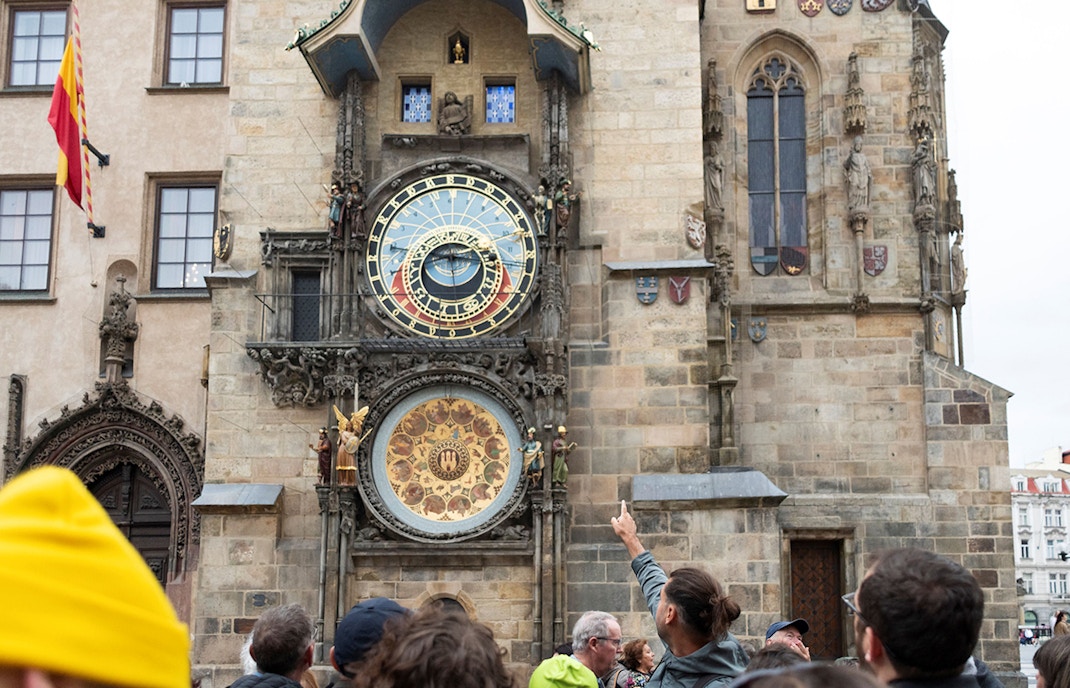

Start in Old Town Square a few minutes before the hour so you can watch the apostles from below, then enter the Old Town Hall immediately after the crowd disperses.
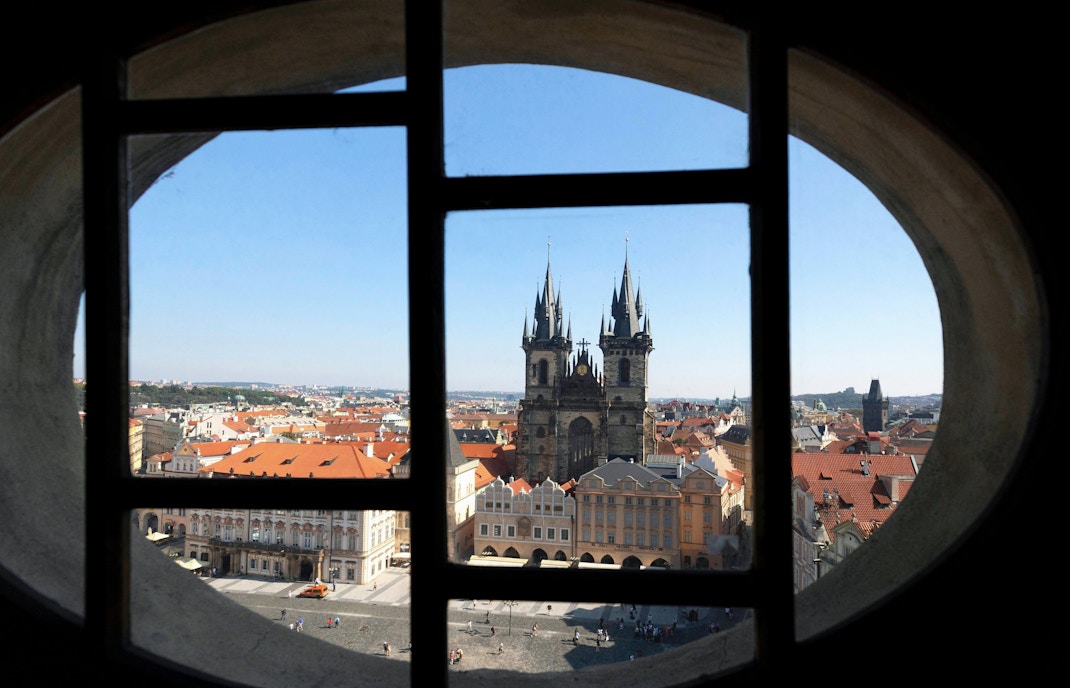
Go to the tower first while your sense of the square is still fresh; save the chapel, halls, and exhibits for the way down. You must see the clock mechanism, the chapel window near the apostles, and the 360-degree gallery over Old Town.
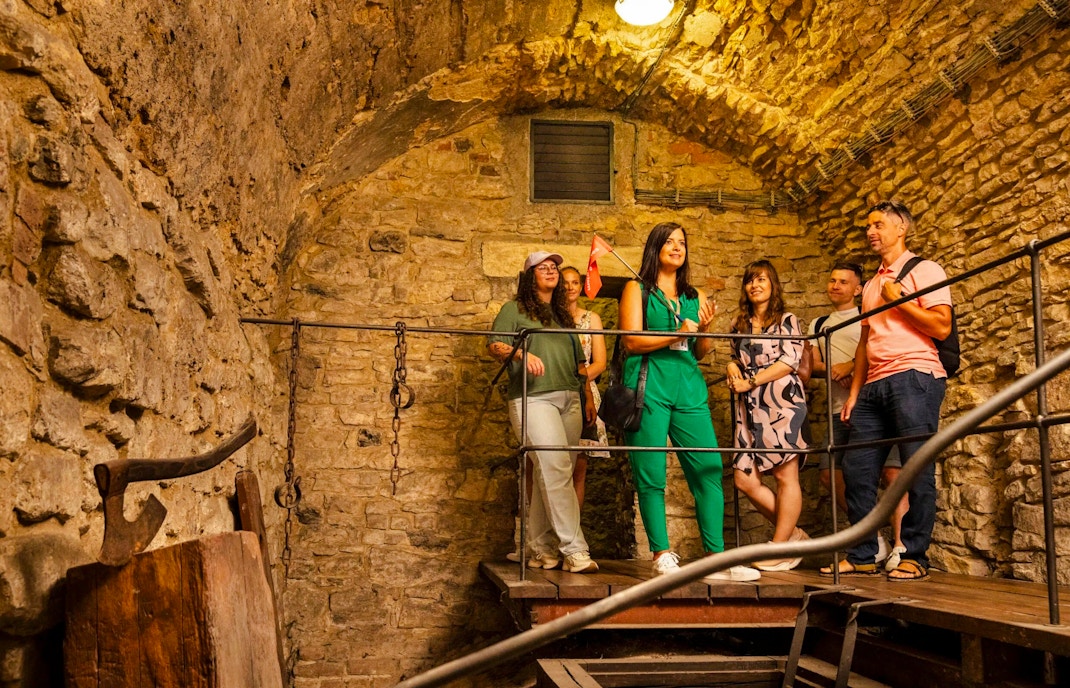
The underground and ceremonial halls, which add depth and about 30–45 minutes. Guided vs. self-paced matters here more than at most towers. In a Prague Astronomical Clock guided walking tour, an expert explains the clock’s layered dials and civic symbolism, and opens spaces you would otherwise rush past.
Brief history of the Astronomical Clock Tower
- 1338: Prague’s Old Town buys the Wolflin house and establishes its town hall on the market square.
- 1364: The tower is added, giving the city a vertical landmark at the center of civic life.
- 1381: The Gothic chapel inside the hall complex is consecrated, adding a religious space to the municipal building.
- 1410: Clockmaker Mikuláš of Kadaň and astronomer Jan Šindel install the astronomical clock, now one of the world’s oldest still working.
- 1490s: The calendar dial and sculptural decoration give the clock much of the form visitors recognize today.
- 1945: The Old Town Hall suffers major damage during the Prague Uprising, and the clock later undergoes extensive restoration.
- Today: The restored hall and tower function as a museum, viewpoint, and one of Prague’s defining medieval landmarks.
Who built it?
The Old Town Hall was a civic project of Prague’s Old Town council, but the clock itself was created in 1410 by clockmaker Mikuláš of Kadaň and astronomer Jan Šindel. It was meant to do more than tell time: it publicly displayed the city’s learning, order, and technical ambition.
Architecture of the Astronomical Clock Tower
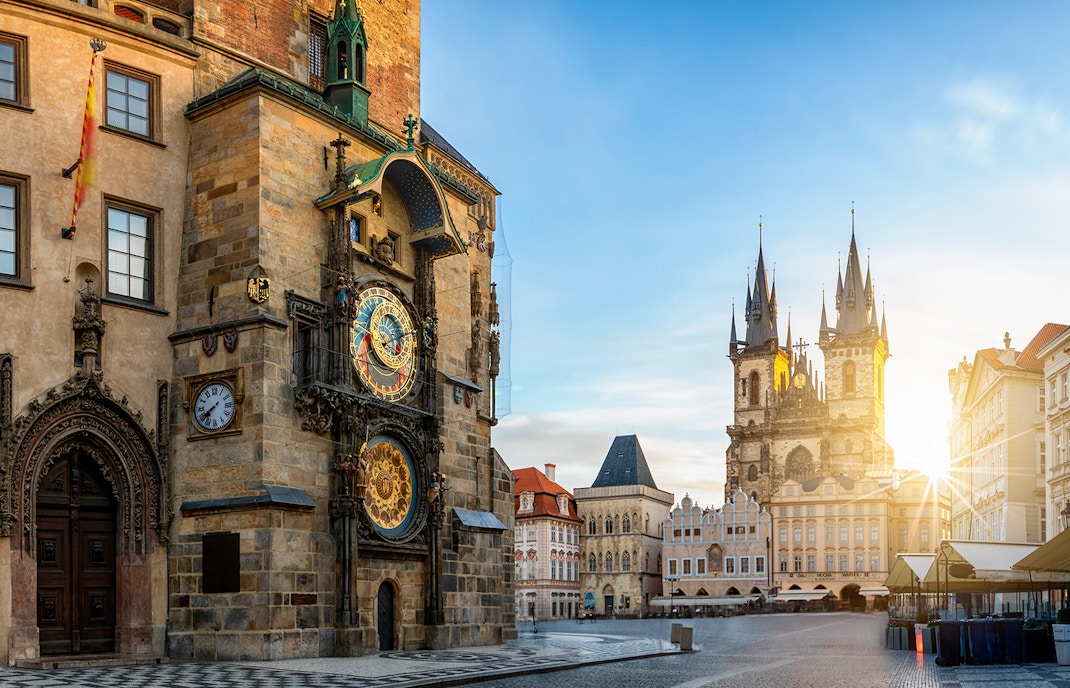
Style
Gothic civic architecture with later layers. From the square, the tower feels stern and vertical, built to rise above market noise and hold your eye.
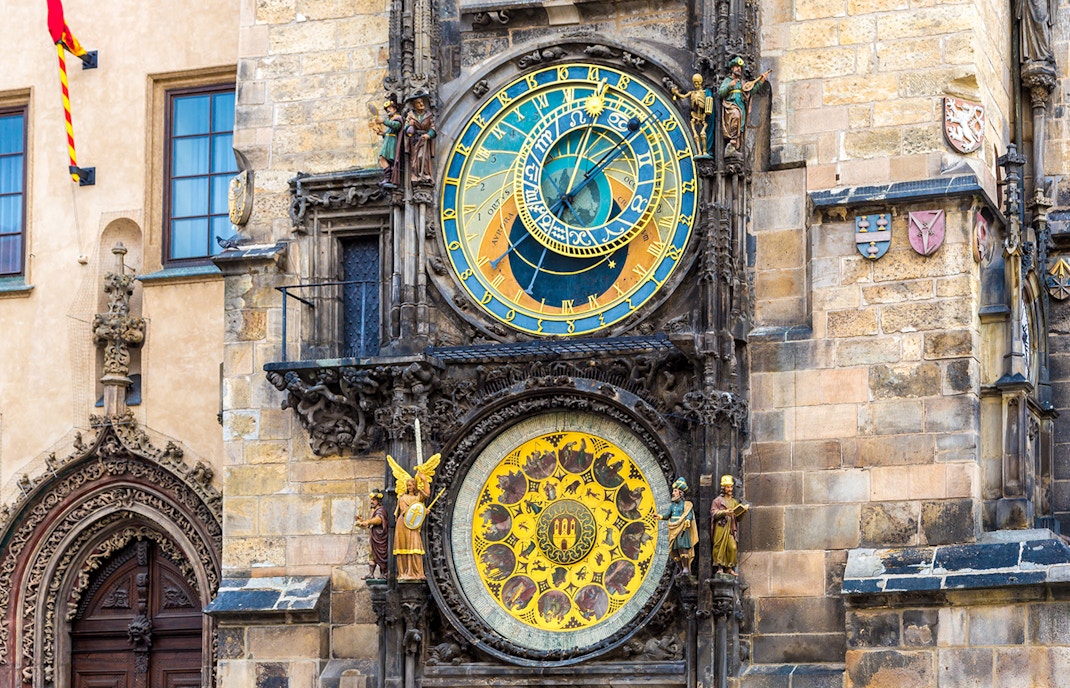
Materials
Stone masonry, timber, glass, and metal define the experience. You notice weathered facade stone first, then darker wood and iron around the clock and interiors.
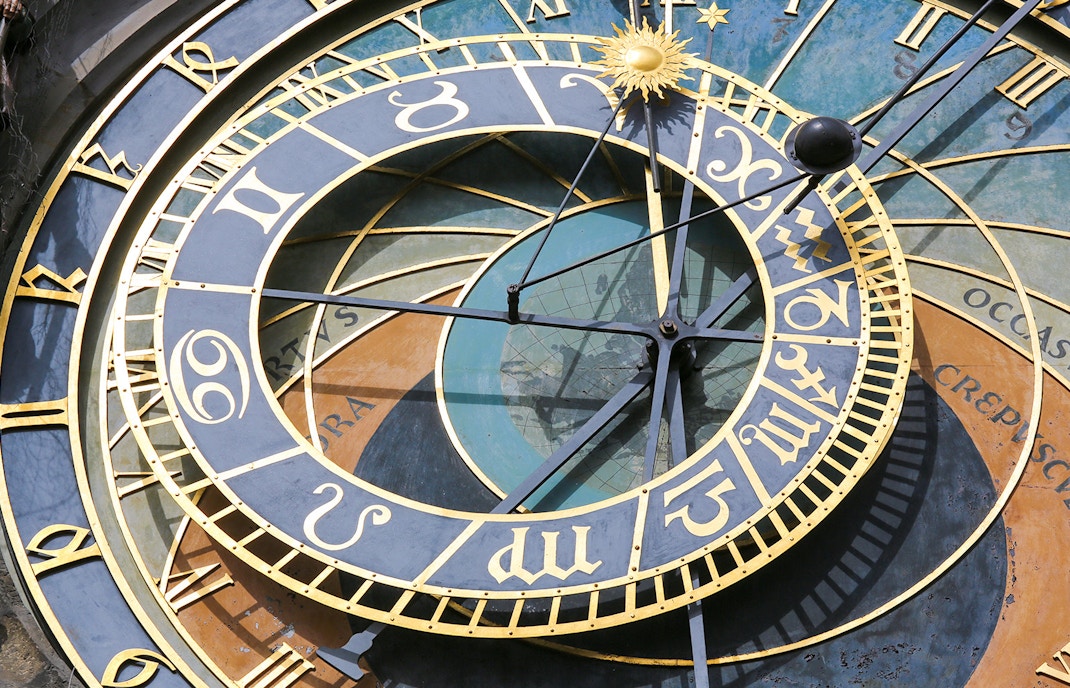
Mechanism
The astronomical clock is the structural feat here, combining timekeeping, calendar display, and moving figures on one facade that still functions publicly.
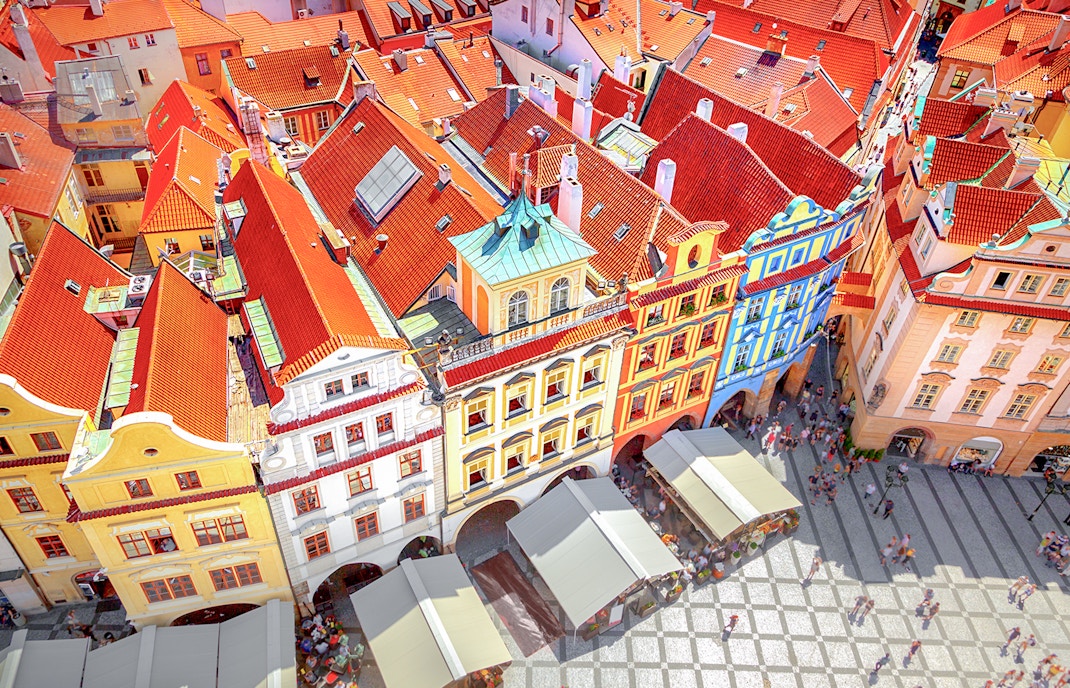
Viewpoint
The climb releases you onto a tight gallery where Prague suddenly opens in every direction, turning dense medieval streets into a readable urban pattern.
How to read the astronomical clock
The clock is easier to enjoy once you know it is doing several jobs at once. The blue and gold upper dial tracks astronomical time, showing the position of the sun and moon as well as Old Czech and Central European time. Below it, the calendar dial marks the months and saints’ days. Around the face, the moving figures are moral warnings as much as decoration: Death rings the bell, Vanity admires itself, and the apostles pass above. It is less a single clock than a medieval model of the universe.
Frequently Asked Questions About the Astronomical Clock Tower
Yes, especially if you want more than the free street-level show. Paid entry gives you the tower gallery, historic rooms, and a closer look at the mechanism. The Prague Guided Walking Tour: Old Town with Astronomical Clock Toweris the strongest first-time option.
Most visitors need 45–90 minutes. Allow closer to 2 hours if you want the hourly show, tower climb, and guided interiors, or if you visit at midday when elevator waits are longest.
Don’t miss the chapel window near the apostles, the clock mechanism, and the rooftop gallery facing Týn Church and Prague Castle. If you join a guided tour of the Astronomical Tower, the underground rooms are the part most independent visitors never see.
Yes for older children and first-timers, especially if they like moving mechanisms and city views. Very young children may struggle with crowding and waiting, and strollers are impractical once the square fills up.
Usually yes in summer, on weekends, and around Christmas markets. Pre-booking mainly saves the ticket-counter line, not the elevator wait. The Prague Astronomical Clock Tower Skip-the-Line Guided Tour is the most direct option if you want entry sorted ahead.
It means you bypass the on-site ticket purchase line. It does not mean priority boarding for the elevator, which is the main bottleneck on afternoons. If you want the smoothest visit, go early rather than relying on the label alone.
Yes, there is a small elevator, but capacity is limited and that is often where the real queue forms. If you have tight timing, arrive near opening rather than around noon or sunset.
The clock is renowned for its intricate astronomical dial, moving apostle figures, and centuries-old engineering. It is one of Prague's most iconic landmarks and a major tourist attraction.
Every hour, mechanical figures of the Twelve Apostles appear in the clock's upper windows while other animated figures move, creating a short medieval spectacle that attracts crowds throughout the day.
Yes. The combination of medieval history, unique engineering, the famous astronomical clock, and spectacular city views makes it one of Prague's most rewarding attractions.


