The origins of the Astronomical Clock remain somewhat mysterious. However, the earliest known historical reference to the clock dates back to October 9, 1410. It was installed by clockmaker Mikuláš of Kadaň and astronomer and scientist Jan Šindel. Mikuláš was granted a house near Havel’s Gate (now located near the Můstek metro station), along with a one-time payment of 3,000 groschen and an annual salary of 600 groschen for the clock’s maintenance.
What is the origin of the Prague Astronomical Clock?
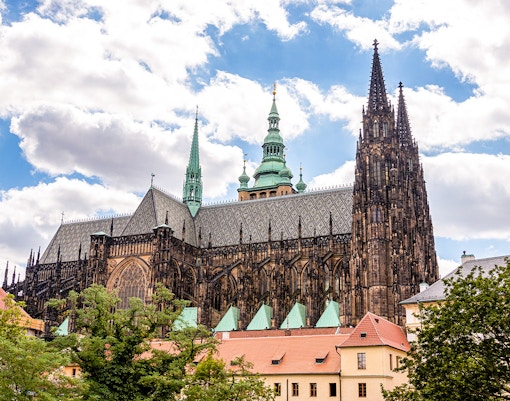
Early History of the Astronomical Clock
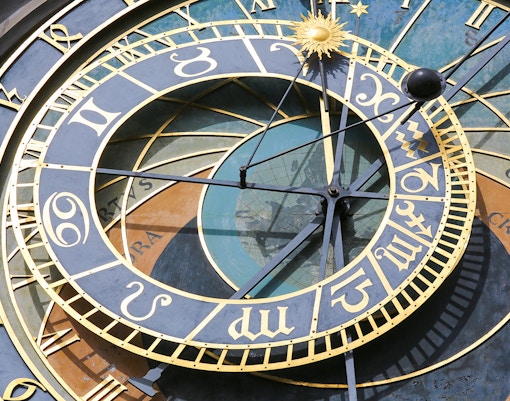
Hanuš’s enhancements to the Astronomical Clock
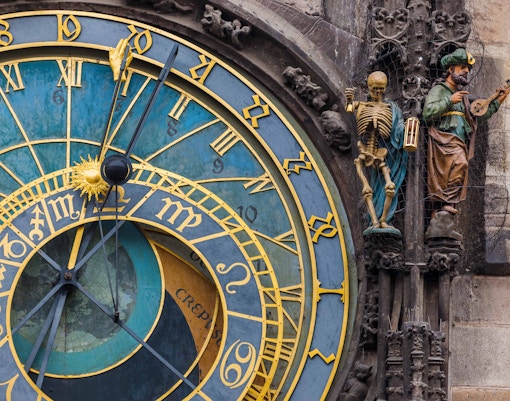
Hanuš enhanced the main dial by adding more astronomical features, bringing the clock closer to its present form. He also introduced the skeleton figure on the right side of the main dial, which came to be known as Klapáček (the Clapper) due to its jaws opening and closing every hour. Additionally, Hanuš created the first calendar dial for the clock.
Animated figures and new additions
The next significant upgrade occurred in 1659, as the country began to recover from the devastation of the Thirty Years' War, which ended in 1648. The clock underwent extensive repairs and was further enhanced with the addition of animated wooden figures. These figures were designed to represent some of humanity's darkest traits: Vanity, holding a small silver mirror; Greed, clutching a bag of coins; and the Turk, playing a lute, a figure steeped in political incorrectness.
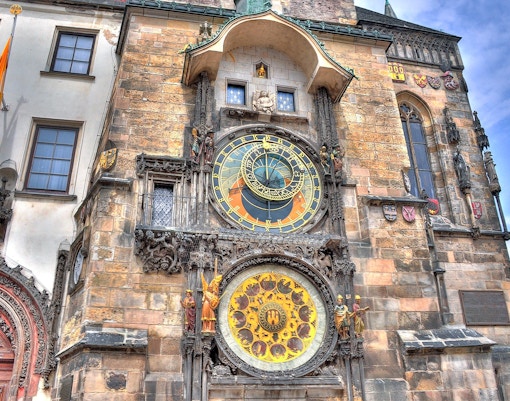
Revival and restoration of the Astronomical Clock
Throughout the 18th century, the clock was at risk of being removed, as many viewed it as an outdated and broken relic. However, by the 19th century, during the National Revival, public opinion shifted, and the clock's value was recognized. In 1866, it was restored, with artist Josef Mánes contributing a new calendar dial (now a replica, with the original in the City of Prague Museum). It's also likely during this time that the twelve Apostles statues were added, parading past the windows every hour. With the clock nearly complete, the final touch was added in 1882 during another reconstruction of the Old Town Hall: the golden rooster.
