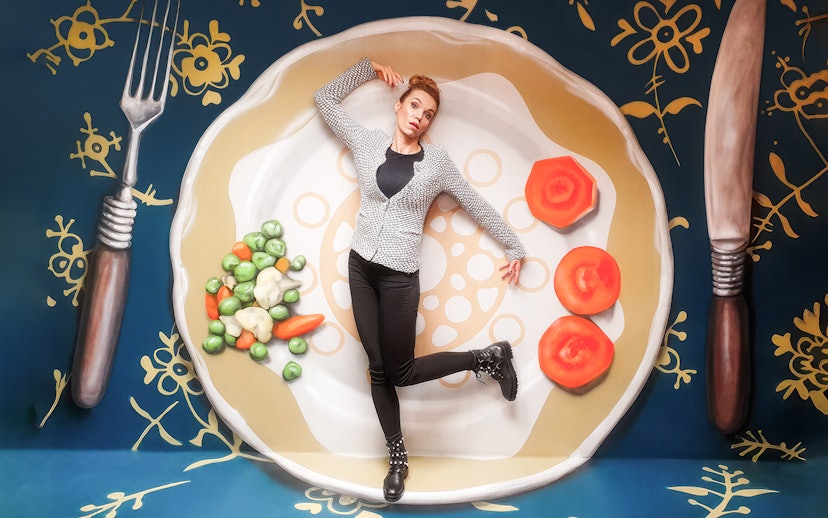
Hours, directions, entrances, and the best time to arrive
Museum of Fantastic Illusions visitor guide
The Museum of Fantastic Illusions is an interactive illusion museum in central Prague best known for hands-on photo setups, gravity-defying rooms, and oversized perspective tricks. It is a short visit, but it can feel surprisingly slow once other visitors start staging photos in the same rooms. The biggest difference between a rushed visit and a good one is when you go. This guide covers timing, tickets, layout, and what to prioritise.
Quick overview: Museum of Fantastic Illusions at a glance
This is a short, playful visit, but timing matters more than most people expect because the museum works best when you are not waiting to use the same photo setups as everyone else.
- When to visit: Daily, 9am–9pm; weekday mornings are noticeably calmer than late afternoons and weekends, because the most popular rooms slow down once multiple groups start taking staged photos.
- Getting in: From CZK 349 for standard entry, with skip-the-line entry available online; booking ahead matters most on weekends, school breaks, and holiday periods when short queues eat into a visit that usually lasts about an hour.
- How long to allow: 45–75 minutes for most visitors, with longer visits usually caused by photo stops rather than the museum’s size.
- What most people miss: The themed story rooms and altered art pieces, including the Einstein, Chaplin, and Mona Lisa setups, get rushed because most people spend too long at the giant chair and gravity rooms.
- Is a guide worth it? No for most visits — the museum is easy to do on your own, and the real value comes from quieter timing and taking your time with the photo setups.
Jump to what you need
🕒 Where and when to go
🗓️ How much time do you need?
Visit lengths, suggested routes, and how to plan around your time
🎟️ Which ticket is right for you?
Compare all entry options, tours, and special experiences
🗺️ Getting around
How the galleries are laid out and the route that makes most sense
🪄 What happens inside
Giant chair, anti-gravity room, and themed illusion scenes
♿ Facilities and accessibility
Lockers, access limits, and family-friendly basics
Where and when to go
How do you get to the Museum of Fantastic Illusions?
The museum is in central Prague, inside Myšák Gallery near Wenceslas Square and close to Můstek station, so it is easy to fit into a city-center day.
Myšák Gallery, near Wenceslas Square, Prague
→ Open in Google Maps
- Metro: Můstek station (Lines A and B) → short walk → the simplest public transit option from most central Prague neighborhoods.
- Tram: Use a Wenceslas Square-area stop → short walk → useful if you are already sightseeing in New Town or Old Town.
- Taxi / rideshare: Drop off at Myšák Gallery → very short walk → best if you are arriving with children or want the quickest door-to-door option.
Full getting there guide
Which entrance should you use?
The museum is straightforward to enter, but visitors most often lose time at the ticket desk instead of going straight up with a pre-booked ticket.
- Located at: The entrance is inside Myšák Gallery; expect the lightest waits on weekday mornings and the longest waits on weekend afternoons and holidays.
Full entrances guide
When is Museum of Fantastic Illusions open?
- Monday–Sunday: 9am–9pm
- Last entry: Plan to arrive well before closing if you want time for photos rather than a rushed walkthrough
When is it busiest? Weekend afternoons, summer weeks, and December are the busiest windows, when even a small crowd can make the photo rooms feel slower.
When should you actually go? Go in the first 1–2 hours after opening on a weekday if you want cleaner photos and less waiting for the most popular illusion setups.
How much time do you need?
Which Museum of Fantastic Illusions ticket is best for you
| Ticket type | What's included | Best for | Price range |
|---|---|---|---|
Museum of Fantastic Illusions Skip-the-Line Tickets | Skip-the-line entry to the Museum of Fantastic Illusions | A short Prague itinerary where you want to avoid wasting part of a 45–75 minute visit in the ticket line |
How do you get around Museum of Fantastic Illusions?
Layout and route
The museum is compact and easy to cover in 1 visit, but it is more photo-led than route-led, which means you can lose time doubling back once popular rooms fill up.
- Entrance area: Orientation and lockers → use this to put bags away and free up your hands for photos → 5–10 minutes.
- Forced-perspective rooms: Giant chair and size-shifting setups → the funniest scale illusions and easiest shareable photos → 10–15 minutes.
- Themed scenes: Edward Kelley’s lab, King Kong, dinosaur nest, and other staged backdrops → best for slower, posed photos → 15–20 minutes.
- Gravity and mirror rooms: Anti-gravity, levitation, and reflective illusions → the most striking physics-defying shots → 10–15 minutes.
- Altered art and celebrity setups: Einstein, Chaplin, and trick-painting pieces → quick to browse, but easy to skip if you rush → 10 minutes.
Suggested route: Start with the bigger perspective and gravity rooms while they are emptier, then slow down for the themed scenes and altered art pieces at the end. Most visitors do the opposite, which is why the best photo rooms get congested first.
Maps and navigation tools
- Map: There is no complex route to learn in advance → the museum is small enough to self-navigate once inside → ask staff at entry which rooms are busiest first.
- Signage: Signage is usually enough for moving through the space, but it will not tell you when to return to a room for a better photo window.
- Audio guide / app: An audio guide is not essential here → the value is in interacting with the rooms rather than following long explanations → spend your time on the setups instead.
💡 Pro tip: Start with the rooms that need the most empty space around you — especially the giant perspective and gravity setups — then come back to the quicker art-based illusions later.
Get the Museum of Fantastic Illusions map / audio guide
What happens inside Museum of Fantastic Illusions?

1/5
Magic chair
Exhibit type: Forced-perspective size illusion
This is 1 of the museum’s signature setups, and it works because the room is built to distort scale so dramatically that 2 people can look giant and tiny in the same frame. It is worth slowing down here rather than settling for the first photo. Most visitors miss how much the result changes with where each person stands, so take 2 or 3 tries.
Where to find it: In the main forced-perspective illusion section early in the visit.
Anti-gravity room
Exhibit type: Tilted room illusion
This room creates the classic ‘walking on the wall’ or ‘running on the ceiling’ effect, and it is 1 of the most convincing physics tricks in the museum once the photo is taken straight. The best part is not the room itself, but how ordinary poses suddenly look impossible in photos. Most visitors rush in and out without testing different body angles.
Where to find it: In the gravity-defying section among the most photo-heavy rooms.
Levitation and spinning setup
Exhibit type: Motion and orientation illusion
This setup is built to make your body look as if it is floating or twisting in ways that should not be possible. It is especially effective in photos because your brain reads the finished image differently from what the room feels like in person. Most people miss the small change in stance that makes the illusion click, so use the staff’s posing tips if offered.
Where to find it: Near the other gravity and perspective-based installations.
Edward Kelley’s alchemist laboratory
Exhibit type: Themed fantasy scene
This room gives the museum more character than a standard illusion stop because it mixes photo trickery with a story-led backdrop. It is not just a decorative set — the props and angles are designed to turn you into part of the scene. Many visitors overlook the smaller visual jokes in the background because they focus only on the central pose.
Where to find it: In the themed scene area deeper into the museum.
Einstein, Chaplin, and altered art pieces
Exhibit type: Character and art-parody illusion
These setups are some of the museum’s easiest-to-miss highlights because they do not look as instantly dramatic as the giant chair or anti-gravity room. They reward a slower look, especially if you enjoy clever visual jokes rather than just big perspective tricks. The Mona Lisa variation is a good example — it lands better when you stop long enough to notice what has changed.
Where to find it: Toward the later rooms, mixed among the themed and art-based illusions.
Facilities and accessibility
- 🎒 Cloakroom / lockers: Free lockers are available, which makes a real difference here because you will want both hands free for phones and posing.
- 👶 Stroller storage: Strollers can be left at the desk so you do not have to maneuver them through the tighter photo rooms.
- 🍽️ Food and drink: There is no reason to plan this as an eat-inside attraction; it works better as a short stop before or after a café break nearby in Myšák Gallery.
- 📸 Photo-focused setup: Staff may help with poses or angles, which is genuinely useful in rooms where the illusion only works from 1 viewing position.
- ♿ Mobility: The museum is not wheelchair accessible, so this is not a good fit if you need step-free access throughout the visit.
- 👁️ Visual impairments: This is a heavily visual experience built around perspective tricks and staged photos, so the visit adds less value without strong visual access to the rooms.
- 🧠 Cognitive and sensory needs: Weekday mornings are the easiest window if you want a calmer visit, while weekend afternoons are louder and more stop-start because groups linger for photos.
- 👨👩👧 Families and strollers: Children are welcome, but the visit is easier with a lightweight stroller or baby carrier because some rooms work best when you can move quickly into position.
This is a strong family stop because children can participate directly instead of just looking at displays, and the visit is short enough to hold their attention.
- 🕐 Time: Around 45–60 minutes is realistic with younger children, especially if you focus on the giant chair, gravity rooms, and 2–3 themed scenes.
- 🏠 Facilities: Free lockers and stroller drop-off help more than they sound like they will, because they make it easier to move between photo setups quickly.
- 💡 Engagement: Let children ‘direct’ 1 or 2 photos in each room — it keeps them involved and usually leads to better pictures than rushing from setup to setup.
- 🎒 Logistics: Bring a phone with enough battery and storage, skip bulky bags, and aim for the first part of the day when children are not waiting behind other groups.
- 📍 After your visit: Myšák café and patisserie nearby is the easiest follow-on stop if you need a quick reward after the museum.
Rules and restrictions
What you need to know before you go
- Entry requirement: You can buy at the desk or online, but pre-booking helps most on busy afternoons because a short queue takes a big bite out of a short visit.
- Bag policy: Large backpacks are not a good fit for this museum, and using the free lockers is the easiest way to move through the photo rooms comfortably.
- Dress guidance: There is no formal dress code, but shoes with good grip are smarter than slippery soles in the gravity and perspective setups.
Not allowed
- 🚫 Food and drink: Food is best kept outside the exhibit areas so you are not juggling drinks in rooms built for photo positioning.
- 🐾 Pets: Only service animals should be assumed appropriate unless you have confirmed otherwise before arrival.
- 🖐️ Using exhibits: Many setups are interactive, but stick to the intended poses and props rather than climbing or forcing positions the room is not designed for.
Photography
Photography is a core part of the visit, and hand-held phone photos are exactly what these rooms are built for. The distinction is less about permitted versus prohibited rooms and more about pacing — you will get better results by waiting for your turn and using the marked viewing angle. Large gear is a poor fit in this compact museum, especially when other guests are lining up for the same setup.
Practical tips
- Booking and arrival: Book ahead if you are visiting on a weekend, during school breaks, or in December; this is not because the museum takes hours, but because even a 10–15 minute entry wait feels wasteful on a visit that often lasts under 75 minutes.
- Pacing: Do the big perspective and gravity rooms first, then slow down for the themed sets and art-based illusions; most people burn time early and rush the quieter rooms at the end.
- Crowd management: Weekday mornings work best here because the museum feels much roomier when you are not waiting for other groups to finish photos in the same 3 or 4 popular setups.
- What to bring or leave behind: Bring a fully charged phone and leave bulky bags in the free lockers; the best part of this museum is hands-free movement between quick photo moments.
- Photos: Take 2 shots in every room — 1 fast version and 1 adjusted version — because many illusions only look right once you correct your position by a few inches.
- Food and drink: Treat this as a pre-lunch, dessert-break, or rainy-day stop rather than a major half-day outing; Myšák café and patisserie nearby makes the easiest before-or-after pairing.
What else is worth visiting nearby?
Commonly paired: Wenceslas Square
Distance: A few minutes on foot
Why people combine them: It is the most natural same-area pairing, giving you a playful indoor stop in between Prague’s busier city-center sightseeing.
Book / Learn more
Commonly paired: Museum of the Senses
Distance: Short walk or quick transit ride, depending on your route
Why people combine them: Both attractions work well as interactive, family-friendly indoor visits, but this museum is more photo-led while Museum of the Senses leans more toward hands-on sensory science.
Book / Learn more
Also nearby
Mucha Museum
Distance: Short walk
Worth knowing: This is the better nearby follow-up if you want something quieter and more art-focused after a playful, high-energy visit.
Old Town Square
Distance: Walkable from the museum through central Prague
Worth knowing: It is an easy next stop if you want to turn this short museum visit into part of a broader sightseeing route rather than a standalone outing.
Eat, shop and stay near Museum of Fantastic Illusions
- On-site: The museum itself is a short attraction rather than a food stop, but Myšák café and patisserie in the same gallery area is the obvious before-or-after choice for coffee, pastries, and a comfortable reset.
- Better options nearby: Not applicable.
- 💡 Pro tip: If you want the museum to feel like a smooth city-center stop, do Myšák after your visit rather than before it, so you are not juggling bags, boxes, or coffee around the photo rooms.
- Myšák Gallery area: The surrounding gallery and central shopping district are more useful for a casual browse than destination shopping, which suits a short museum stop better than a dedicated retail detour.
Yes — this is a practical base if you want a walkable central Prague stay with easy access to Wenceslas Square, Old Town, and transit. The neighborhood suits short trips especially well because you can slot smaller indoor attractions like this one between bigger sightseeing blocks. It is less about local character than convenience, but for many travelers that trade-off works.
- Price point: Central Prague pricing usually skews mid-range to high compared with outer districts, though you gain time-saving walkability.
- Best for: Visitors on a short trip who want to move between major sights, cafés, and transit without much planning.
- Consider instead: Malá Strana or Old Town if you want more atmosphere for a longer stay, or a quieter neighborhood if this museum is only 1 small stop in a broader Prague itinerary.
Frequently asked questions about visiting Museum of Fantastic Illusions
Most visits take 45–75 minutes. You can move through faster if you only want a quick look, but the visit gets much better when you leave time for retakes in the most popular illusion rooms and do not rush the themed sets at the end.
No, you do not always need to book in advance, but it is the smarter choice on weekends, school breaks, and holiday periods. Walk-ins are possible, yet a short wait matters more here than at a larger museum because the full experience usually only takes around 1 hour.
Yes, skip-the-line is worth it if you are fitting this into a tight Prague itinerary. The museum itself is short, so avoiding even a modest queue helps you spend your time inside the photo rooms instead of at the ticket desk.
Around 10 minutes early is usually enough. This is not the kind of attraction where you need a long pre-arrival buffer, but a little extra time helps you find the entrance, use the lockers, and start without feeling rushed.
Yes, but large backpacks are not practical inside the museum. Free lockers are available, and using them makes the visit much easier because many of the illusion setups work best when you are moving quickly and holding only your phone.
Yes, photography is a big part of the experience. The museum is built around interactive photo moments, so hand-held phone photography is the norm, and you will get the best results by waiting for the correct angle rather than rushing through each room.
Yes, groups can visit, and the museum works well for families, friends, and school-age visitors. Large groups should plan ahead rather than simply turning up, because the rooms are compact and the photo setups can bottleneck when too many people reach the same scene together.
Yes, it is very suitable for families with children. The museum is short, interactive, and easy for children to engage with because they can participate directly in the illusions instead of only looking at displays behind glass.
No, the museum is not wheelchair accessible. If step-free access is essential for your visit, this is an important limitation to factor in before booking.
Food is easier to plan before or after the visit than during it. The museum is a short stop, and the nearby Myšák café and patisserie is the most convenient option if you want coffee, pastries, or a sit-down break right afterward.
Children under 1 meter tall can enter free. Older children usually need a child ticket, and the museum also offers family pricing, which is useful if you are visiting as 2 adults and 2 children.
Weekday mornings are the best time to visit. The museum is much easier to enjoy when the main photo rooms are not already occupied by multiple groups, and you will usually get cleaner photos with fewer people in the background.