Plan your visit to Prague Zoo
Prague Zoo is a vast hillside zoo best known for its naturalistic habitats, rare conservation species, and one of Europe’s strongest breeding programs. This is not a quick, flat city attraction: a full visit usually means 5–6 hours, around 10km of walking, and a lot of time moving between upper and lower sections. The biggest difference between a rushed day and a good one is where you start. This guide helps you choose the right entrance, route, timing, and ticket option.
Quick overview: Prague Zoo at a glance
If you want the visit to feel manageable, decide your entrance, route, and food plan before you arrive.
- When to visit: Daily, with seasonal hours that run from 9am opening year-round to 4pm–7pm closing depending on the month. Weekdays after 2pm in September and October are noticeably calmer than summer mornings, and many animals are more active once the first bus-and-school rush has passed.
- Getting in: From CZK 300 for standard online entry. Guided Zoo Expres rides start from CZK 2,500 per vehicle. Book online for weekends, holidays, and summer mornings, because it skips the ticket-office line even though it does not bypass the turnstiles.
- How long to allow: 5–6 hours for most visitors. It stretches to a full day if you cover both major pavilions and the upper zoo without using the chairlift.
- What most people miss: The Giant Salamander House, the Gobi exhibit for Przewalski’s horses, and the Sklenářka upper entrance route that saves the day’s hardest climb.
- Is a guide worth it? Yes for mobility-limited visitors or anyone who wants the full site without the 10km walk; otherwise, a map and a smart route are usually enough.
Jump to what you need
🕒 Where and when to go
🗓️ How much time do you need?
🎟️ Which ticket is right for you?
🗺️ Getting around
🦍 Which animals to prioritise
♿ Facilities and accessibility
Where and when to go
How do you get to Prague Zoo?
Prague Zoo is in the Troja district in north Prague, about 6.3km from Old Town and closest to Nádraží Holešovice for the fastest public transit approach.
- Bus: Nádraží Holešovice → Bus 112 → Zoo Praha stop → direct lower-gate arrival and the fastest route from central Prague.
- Bus: Kobylisy area → Bus 234 → Zoo Praha - Sklenářka stop → upper entrance access and a smarter start for downhill routes.
- Tram + bus: Tram 17 to Nádraží Holešovice → Bus 112 → easiest transfer from the riverside and Old Town side.
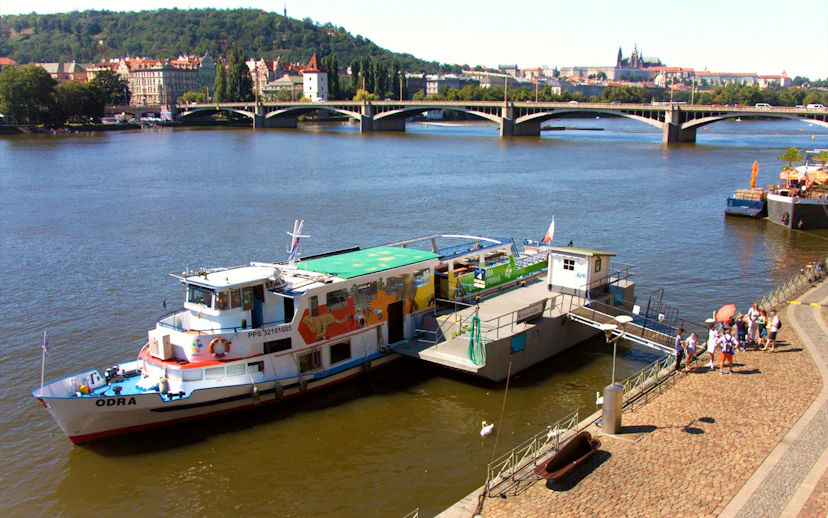
- Steamboat: Rašínovo nábřeží or central river stops → seasonal Vltava boat → scenic but slow arrival, best only if the ride is part of the day.
- Taxi / rideshare: Drop at the entrance you plan to use → lower gate for Bus 112 simplicity, Sklenářka for a downhill route.
Which entrance should you use?
Prague Zoo has two useful public entrances, and most visitors make the day harder by defaulting to the main gate when the upper entrance would suit their route better.
- Main Entrance: Located at the lower south end near the Bus 112 stop. Best for first-time visitors arriving direct from Nádraží Holešovice. Expect 20–60 min wait on summer weekends if you buy on-site.
- Sklenářka entrance: Located on the upper side near the Bus 234 stop. Best for online ticket holders, lighter morning crowds, and visitors who want to walk downhill through the zoo. Expect 5–15 min wait on most days.
When is Prague Zoo open?
- Daily: Opens at 9am year-round
- June–August: 9am–7pm
- April–May and September–October: 9am–6pm
- March: 9am–5pm
- November–February: 9am–4pm
- Last entry: 30 mins before closing
When is it busiest? Summer weekends from about 10:30am to 1pm are the crunch point, especially at the main gate, the Bus 112 stop, and family zones near playgrounds.
When should you actually go? Weekdays after lunch in September and October usually give you easier paths, lighter pavilion crowds, and better chances of seeing active animals.
How much time do you need?
| Visit type | Route | Duration | Walking distance | What you get |
|---|---|---|---|---|
Highlights only | Sklenářka entrance → Dja Reserve → Elephant Valley → Indonesian Jungle → Giant Salamander House → exit at main gate | 3–4 hrs | ~4km | You cover the headline pavilions and save your legs by walking downhill, but you skip Darwin Crater, the Gobi exhibit, and most family zones. |
Balanced visit | Main entrance → Indonesian Jungle → Giant Salamander House → African House → chairlift or climb up → Elephant Valley → Dja Reserve → Darwin Crater → exit | 5–6 hrs | ~7km | This gives you the core pavilions, major mammals, and one upper-zoo science zone without trying to force every enclosure into one day. |
Full exploration | Main or Sklenářka entrance → both lower-zoo biotope pavilions → African House → Children’s Zoo → chairlift or full climb → Elephant Valley → Dja Reserve → Darwin Crater → Gobi → upper trails → exit | 6.5+ hrs | ~10km | You see the zoo as a full-site experience, including rarer conservation exhibits, but it is physically tiring and the final upper sections feel long if you started at the wrong gate. |
Which Prague Zoo ticket is best for you
| Ticket type | What's included | Best for | Price range |
|---|---|---|---|
Single Admission (E-ticket) | Zoo entry + access to pavilions and outdoor habitats | A standard full visit where you want to avoid the ticket-office line and start with the entrance that suits your route | From CZK 300 |
Single Admission (Cash) | Zoo entry + access to pavilions and outdoor habitats | A last-minute visit when you are already on-site and don’t mind paying more for flexibility | From CZK 330 |
Prague Visitor Pass | Zoo entry + unlimited public transportation + ferry access + other city inclusions | A Prague itinerary with several paid sights where transport savings matter as much as zoo admission | From CZK 3,200 |
Zoo Expres (Private) | Electric cart ride + guide for up to 4 people | A long zoo day that would otherwise be too steep, too tiring, or too time-consuming on foot | From CZK 2,500 |
How do you get around Prague Zoo?
Zoo layout
Prague Zoo has several major zones spread across 58 hectares, and the upper and lower grounds are separated by a steep escarpment that changes how tiring the visit feels. Starting at Sklenářka works well because it turns the hardest climb into a mostly downhill route.
- Lower Zoo biotope pavilions: Indonesian Jungle, Giant Salamander House, and dense indoor habitats → budget 1.5–2 hrs.
- Mid-zoo transition: African House, paths toward the chairlift, and family traffic pinch points → budget 45–60 mins.
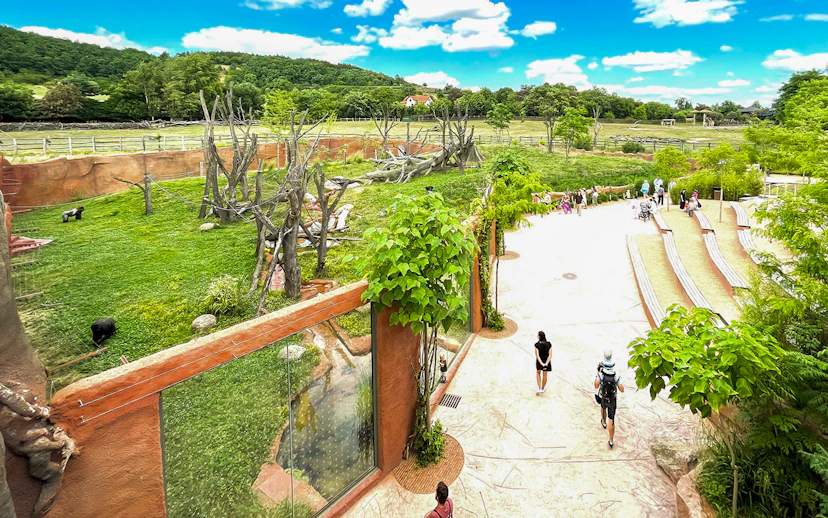
- Upper Zoo mammals: Elephant Valley and Dja Reserve → budget 1.5 hrs if you stop properly.
- Upper Zoo science trail: Darwin Crater and the Gobi exhibit → budget 45–60 mins.
- Suggested route: Start at Sklenářka, do the upper mammals first, then descend through the major pavilions, because climbing back up later is where most visitors lose time and energy.
Maps and navigation tools
- Map: Downloadable zoo map + on-site boards → covers pavilions, animal houses, entrances, and internal transport → get it before arrival on your phone.
- Signage: Good enough for main landmarks, but the site is large enough that a downloaded map genuinely helps with route planning between upper and lower sections.
- Large outdoor POIs only: An offline map is useful in the upper zoo, where long paths make wrong turns feel expensive in both time and effort.
💡 Pro tip: Download the map before you arrive and decide your entrance first — at Prague Zoo, the wrong start can add the day’s toughest uphill section before you’ve seen your priority animals.
Which animals and habitats should you prioritise?

Chinese pangolins
Species: Chinese pangolin
Prague Zoo is one of the few places in Europe where seeing Chinese pangolins is a realistic possibility, which makes them one of the zoo’s biggest conservation draws rather than just a rare-name exhibit. Most visitors move past too quickly because pangolins are quiet and easy to miss behind glass and shadow. Slow down, let your eyes adjust, and look for movement near the base of the habitat rather than scanning only at eye level.
Where to find it: In the indoor conservation-focused exhibits, near the lower-zoo pavilion circuit.
Dja Reserve gorillas
Species: western lowland gorilla
Dja Reserve is one of the zoo’s highest-engagement habitats, especially since the recent gorilla births drew even more family attention. The easy mistake is treating it like a quick look-from-the-window stop, when the troop dynamics and shifting use of indoor and outdoor space reward a longer pause. Visitors often miss the younger gorillas because they focus only on the largest adult in view.
Where to find it: Upper zoo, in the Dja Reserve complex.
Giant Salamander House
Species: Chinese giant salamander
This is one of Prague Zoo’s smartest and easiest-to-miss specialty exhibits. The house is smaller and quieter than the big mammal habitats, so people rush through it, but it is the best place in the zoo to see a conservation story that feels genuinely unusual. Look for the literary details and the oversized resident that makes the space memorable beyond a standard reptile-house stop.
Where to find it: Lower zoo, in the Giant Salamander House near the major indoor pavilion route.
Elephant Valley
Species: Asian elephant
Elephant Valley is one of the zoo’s signature modern habitats, and it feels spacious enough that you need time to let the scene unfold. Many visitors stop for the first wide photo and move on, missing the shrine details and the moments when the elephants shift between the larger yard areas. This is also one of the better places to pause rather than power-walk through.
Where to find it: Upper-to-mid zoo, in the Elephant Valley pavilion and outdoor habitat.
Darwin Crater
Species: Tasmanian devil and Australian fauna
Darwin Crater stands out because it gives Prague Zoo a distinct conservation niche that many European zoos do not match. Visitors often come for the better-known mammals and then run out of energy before they reach it, which is why it remains one of the more rewarding upper-zoo priorities. The Tasmanian devils are the real draw, but the broader Australian setting makes it worth more than a quick check-in.
Where to find it: Upper zoo, beyond the main elephant and gorilla circuit.
Gobi exhibit
Species: Przewalski’s horse
The Gobi area matters because Prague Zoo is not just showing these horses — it is central to the species’ global breeding and rewilding story. That context turns what might look like a simple open habitat into one of the zoo’s most important conservation stops. Most visitors skip it late in the day when their legs go, but that is exactly why it stays quieter than the headline mammal zones.
Where to find it: Upper zoo, near Darwin Crater on the scientific trail side of the park.
Facilities and accessibility
- 🎒 Cloakroom / lockers: Code-lock lockers measuring about 40x30x45cm are available at both entrances, and bulkier luggage must be left at the main entrance terrace.
- 🍽️ Food stalls and restaurants: There are multiple on-site dining points and drink vending machines, but food quality gets mixed reviews, so many visitors treat them as convenience stops rather than part of the day.
- 🍽️ Picnic areas: Picnic spots are available, which makes bringing your own simple lunch a smart move if you want to avoid peak lunch lines and overpriced fried food.
- 🚼 Strollers and carts: Strollers up to 15kg and hand carts up to 40kg are available free of charge with ID, which helps families manage the zoo’s long distances.
- ♿ Wheelchairs: Wheelchairs are available free of charge with ID, and the zoo asks you to reserve ahead on +420 296 112 230.
- ♿ Mobility: Much of the zoo uses paved paths and major pavilions are barrier-free, but the connecting routes can be steep enough to feel physically demanding even if they are technically accessible.
- ♿ Mobility: The biggest challenge is the slope between upper and lower sections, where some connecting paths reach very steep gradients and route planning matters as much as equipment.
- 🧠 Cognitive and sensory needs: The calmest windows are usually weekday afternoons after the main school and family rush, while playground areas and the Bus 112 arrival side are the noisiest parts of the day.
- 👨👩👧 Families and strollers: Families can borrow strollers and carts, but a full end-to-end route still involves hills, so it is better to plan a shorter upper-or-lower focus than force the whole park.
Prague Zoo works very well for children because the animal variety is strong, the habitats feel immersive, and there is enough movement in the day to break up longer walking stretches.
- 🕐 Time: With younger children, 3–4 hrs is realistic if you focus on gorillas, elephants, one indoor pavilion, and the Children’s Zoo rather than trying to complete the whole park.
- 🏠 Facilities: Free stroller and cart loans make a bigger difference here than at flatter zoos because tired children usually hit their limit on the upper-lower transitions first.
- 💡 Engagement: Save the Children’s Zoo for the middle of the visit, not the end, because it resets attention better than another indoor house once walking fatigue kicks in.
- 🎒 Logistics: Bring snacks, a refillable bottle, and a light layer, and start at Sklenářka if you want to avoid the toughest uphill section with a stroller.
- 📍 After your visit: Prague Botanical Garden is the easiest child-friendly follow-up nearby if you still have energy and want something calmer after the zoo crowds.
Rules and restrictions
What you need to know before you go
- Buy online if you can, because e-tickets save the ticket-office queue even though everyone still uses the same turnstiles.
- Small bags fit in the entrance lockers, but bulky luggage has to be left at the main entrance terrace before you start.
- Re-entry is not flexible, so once you leave for better food or a rest elsewhere in Troja, you risk turning a simple break into another paid entry and climb.
Not allowed
- 🚫 Outside picnics are fine, but drones are not allowed anywhere in the zoo grounds.
- 🚫 Bicycles and scooters are not allowed inside the zoo.
- 🚫 Balloons and balls are not allowed because they create stress and distraction around animal habitats.
Photography
Casual personal photography is part of the visit, and the zoo’s open habitats are designed for viewing and photos. The main hard restriction is drones, which are prohibited. If you use larger gear, keep it from blocking viewing windows, narrow paths, and keeper areas, especially in indoor pavilions and around popular habitats such as Dja Reserve and Elephant Valley.
Good to know
- Fake charity petitioners sometimes work the area near the entrances, so do not stop to sign or donate on the street.
- Taxis outside the zoo can quote far above normal Prague transport rates, so Bus 112 or a rideshare app is usually the safer move.
Practical tips
- Book online for summer weekends and holiday mornings, because the longest delay here is usually the ticket-office line rather than the animal areas, and online entry removes that first bottleneck.
- If you want a full-site day, start at the Sklenářka entrance and finish at the main gate, because doing the zoo in the opposite direction turns the steepest section into a late-day climb.
- Don’t rush Indonesian Jungle and Dja Reserve just because they are crowd magnets — they are also the two places where an extra 10–15 mins usually changes what you actually see.
- Use the chairlift as an energy-saving tool, not just a novelty ride, because once your legs go on this terrain, the upper-zoo conservation exhibits are the first part people cut.
- Carry a small bag rather than a bulky daypack, because lockers are limited in size and extra bag friction at the entrance slows down a visit that already involves a lot of walking.
- Eat either early or late by zoo standards: around 11:30am or after 2pm works better than the noon rush, and if food quality matters to you, treat the on-site restaurants as backup rather than the highlight meal of the day.
What else is worth visiting nearby?
Commonly paired: Prague Botanical Garden
Prague Botanical Garden
Distance: 1km — 12–15 min walk
Why people combine them: It sits on the same Troja hillside, so it makes sense as a slower second stop once you’ve finished the zoo’s high-energy animal route.
Commonly paired: Troja Chateau
Troja Chateau
Distance: 1.1km — 15 min walk
Why people combine them: It gives the day a strong contrast — big outdoor animal habitats first, then formal Baroque gardens and a quieter riverside setting afterward.
Also nearby
Fata Morgana Greenhouse
Distance: 1.2km — 15–18 min walk
Worth knowing: If you still want a nature-focused stop after the zoo, this is the more atmospheric part of the botanical garden complex.
Stromovka Park
Distance: 2.5km — 10 min by transit or 35 min walk
Worth knowing: It is a better decompression stop than another ticketed sight if children need open space after a long zoo day.
Eat, shop and stay near Prague Zoo
- On-site: Zoo restaurants and snack points cover basic hot food, fried items, drinks, and quick family meals, but most repeat visitors use them for convenience rather than quality and save a better meal for afterward.
- Bistro Karel (15-min walk, Troja Chateau gardens): Casual bistro food in a much nicer setting than the zoo food courts, and the best nearby option if you care about the meal as much as the attraction.
- Salabka (15-min walk, K Bohnicim 57/2): A more polished winery-and-restaurant stop that suits a slower post-zoo lunch if you are done for the day and do not need to rush back.
- Riverside cafés near Troja (15–20 min walk toward the river landing): Better for coffee and a lighter reset than a full lunch, especially if you arrived or plan to leave by boat.
- 💡 Pro tip: Eat inside the zoo only if you need speed — if you want a better meal, finish your route first and head to Troja Chateau or Salabka instead of breaking the visit mid-day.
- Prague Zoo gift shop: Standard zoo souvenirs, plush animals, and children’s gifts sold near the entrance areas, with the usual convenience-over-uniqueness trade-off.
- Troja Chateau shop: A better stop if you want a local-feeling keepsake rather than mass-market zoo merchandise, especially if you are already walking that way after the visit.
Troja is scenic, green, and much quieter than central Prague, but it is not the most practical base for a first city trip. It works best if the zoo, botanical garden, and a slower riverside pace matter more to you than being able to walk to Old Town. For most short Prague stays, Troja is a day-trip district, not the smartest hotel base.
- Price point: The area skews mid-range to upscale, with fewer budget choices than central Prague and more space-oriented stays than nightlife-focused ones.
- Best for: Visitors who want a calm, family-friendly area near the zoo and do not mind using transit for evenings in the city center.
- Consider instead: Holešovice or central Prague work better for most travelers because they give you faster access to both the zoo route and the rest of the city.
Frequently asked questions about visiting Prague Zoo
Most visits take 5–6 hours, and a full zoo day can easily run past 6.5 hours if you cover both the upper and lower grounds. The site is spread across 58 hectares, and the real time factor is not just animal stops — it is the walking between them, especially if you take the steep routes on foot.
No, you do not have to book in advance, but it is usually the smarter choice. Online tickets save the ticket-office queue, which is the main bottleneck on weekends, holidays, and summer mornings. You still go through the same entry turnstiles, so think of it as skipping the purchase line rather than skipping every line.
No, because Prague Zoo does not have a true skip-the-line lane that bypasses all entry waits. What helps is buying online, which removes the ticket-window queue and can save serious time on busy mornings, but you will still join the normal entry flow at the gates.
You do not need the kind of buffer you would for a tightly timed museum slot, but arriving before the late-morning rush helps. About 15–20 mins early is enough if you already have an e-ticket. If you plan to buy on-site on a summer weekend, build in much more time because that is where the longest waits happen.
Yes, you can bring a small bag or backpack, but bulky luggage is a bad idea. Lockers at both entrances are only about 40x30x45cm, and larger items have to be left at the main entrance terrace. A light day bag works best because this is a long walking day with a lot of slope.
Yes, personal photography is part of the visit, and the zoo’s viewing areas are built for it. The hard rule to remember is that drones are prohibited. Indoors and at popular habitats, keep bulky gear out of the way of viewing glass and pathways so you do not create your own bottleneck.
Yes, Prague Zoo works well for groups, but large groups need a route plan before arrival. The site is spread out enough that people naturally split once the hills and pavilion priorities kick in. If you want to stay together, agree on meeting points in the upper and lower zoo instead of trying to walk every section as one block.
Yes, it is one of Prague’s strongest family attractions, but it is better as a half-day or focused full-day plan than a ‘see everything’ march. The Children’s Zoo, gorillas, elephants, and the indoor pavilions give you enough variety for 3–4 hrs with younger children before fatigue from the hills starts to matter.
Yes, much of Prague Zoo is barrier-free, but it is not easy terrain. Major pavilions and many paths are accessible, yet the steep connecting slopes between upper and lower sections can still be hard work. Reserve a wheelchair ahead if needed, and plan the day around specific zones rather than assuming the whole site will feel flat.
Yes, there is plenty of food inside the zoo, but it is best treated as convenient rather than memorable. Vending machines, snacks, and full meal points are easy to find, though reviews on quality are mixed. If food matters, nearby places in Troja such as Bistro Karel are usually a better reward after the visit.
Yes, it can be too steep for some elderly visitors unless the day is planned carefully. The zoo has paved routes, wheelchair loans, carts, and the chairlift, but the terrain is still hilly enough that a full end-to-end visit can be exhausting. A shorter upper-or-lower route is usually more enjoyable than forcing the whole park.
Sklenářka is usually the better entrance if you already have an online ticket and want a less tiring route. It puts you into the upper zoo first, which lets you work downhill through the day. The main entrance is easier from central Prague by Bus 112, but it is also where the heaviest morning crowd builds.