Is the Museum of Fantastic Illusions worth visiting?

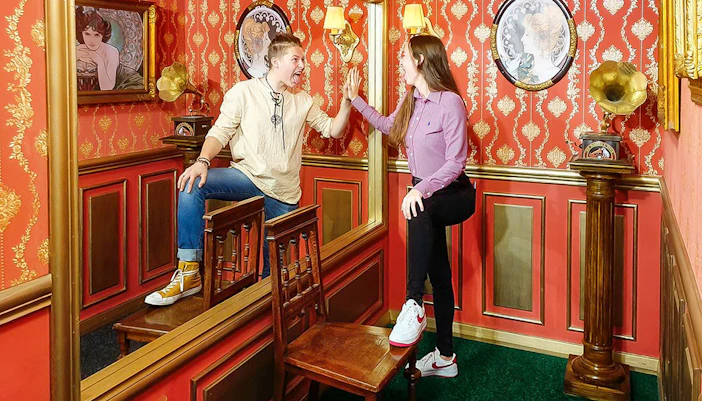
The first thing you notice is how quickly the room starts lying to your eyes. A chair turns one friend into a giant, a tilted set makes the floor feel unreliable, and every few steps someone is laughing at a photo they still do not fully understand.

The museum was built for participation, not quiet observation. Its rooms are designed so you step into the illusion and complete it, which is why the experience feels more like moving through a stage set than walking past display cases.

The emotional payoff is not just the camera roll. It is the pleasure of watching perspective fail in real time, then realizing how simple mirrors, angles, and props can fool your brain so completely. You leave with photos that actually capture the fun you had making them.

Skip it if: you dislike staged photo experiences or want a long, object-heavy museum visit.

What to see at the Museum of Fantastic Illusions?

Entrance illusion rooms at the museum
1/8

Entrance illusion warm-ups

The first rooms introduce the museum’s style with quick visual tricks, mirror effects, and perspective puzzles. They are ideal for testing camera angles before the bigger installations and help first-timers understand how much posing shapes the final result.

Magic chair and size illusions

This classic forced-perspective setup makes one visitor look enormous and another toy-sized. It is one of the museum’s easiest wins, which also means people often linger here longer than expected for repeat shots.

Anti-gravity room

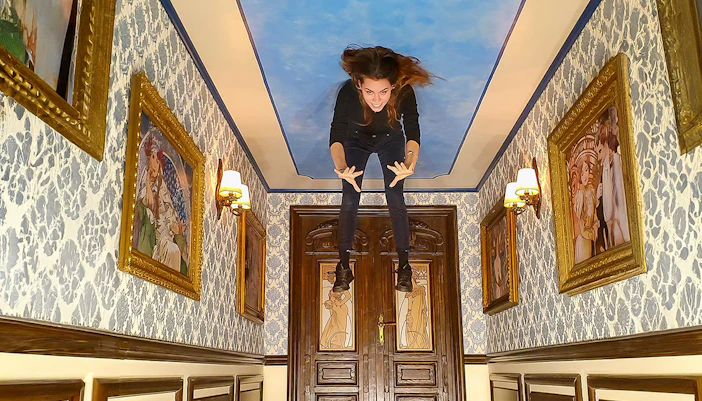
A tilted interior makes walls and floor feel unreliable, letting you pose as if you are walking sideways or clinging to the ceiling. Photos work best when the room briefly clears, so expect short waits at busy times.

Spinning and levitation setups

These rooms create some of the museum’s strangest images, with bodies appearing to float or detach from normal balance. They are quick to experience, but visitors often retake photos until the illusion lands perfectly.

Edward Kelley’s alchemist lab

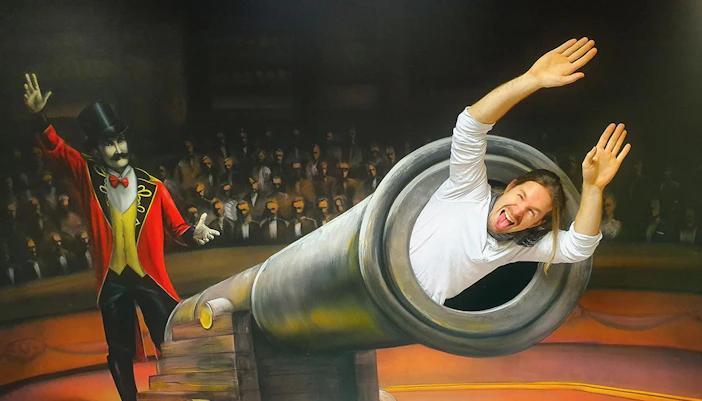
One of the more theatrical scenes, this set leans into Prague’s occult folklore with a medieval workshop, props, and a cannon. It feels less like a puzzle and more like stepping into a staged fantasy tableau.

King Kong and dinosaur scene

This corner is built for playful oversized drama, with visitors perched inside a larger-than-life adventure setup. Families usually spend longer here because the scene works equally well for silly poses and wide group photos.

Einstein, Chaplin, and altered classics

Famous faces and art references appear throughout the museum in twisted comic form. These exhibits reward slower looking because the joke often changes once you shift position or compare what your eyes see to the photo.

Mirror and ballerina room

Reflections, ceiling tricks, and staged viewpoints make this one of the museum’s most disorienting spaces. It is especially good for solo travelers, because the setup does much of the visual work even without a large group.

How to Explore the Museum of Fantastic Illusions

Visit pacing and time needed

Budget 45–75 minutes for a typical visit. If you move quickly and treat it as a playful stop between Prague sights, 45 minutes is enough. If you are visiting with children, taking lots of photos, or waiting for busy rooms to clear, stay closer to 75 minutes.

Suggested route

Start with the simpler perspective rooms near the entrance, then move into the anti-gravity and spinning spaces once you have figured out how the museum wants you to interact. Save the larger themed sets, like the alchemist lab and King Kong scene, for the middle of your visit. End in the mirror-based rooms, which work well once your eye is already warmed up to the museum’s tricks.

What to prioritize

Must-see: the magic chair, the anti-gravity room, and the spinning or levitation setups. Optional: the celebrity and parody scenes, plus repeated photo attempts in the larger fantasy sets, which add 15–20 minutes but usually produce the best group shots.

Guided vs self-paced

Self-paced works better than a formal guided visit here, because the museum is small and intuitive. The real value comes from staff showing you where to stand for the illusion to work.

A Playful Break from Prague's Historic Museums

What sets the Museum of Fantastic Illusions apart is its emphasis on staged, full-body photo scenes rather than science-style explanation panels. You are not mainly reading about perception here; you are stepping into it. That makes it especially good for families, couples, and small groups who want a light indoor attraction with immediate payoff. In Prague, where many museum visits lean historical or art-heavy, this one works best as a playful contrast: short, central, weather-proof, and easy to pair with Wenceslas Square, cafés, and other Old Town stops.

Frequently Asked Questions About the Museum of Fantastic Illusions

Yes, especially if you want a light, interactive break from Prague’s heavier historic sights. Most visitors leave with genuinely funny photos rather than passive museum memories. You can book Museum of Fantastic Illusions skip-the-line tickets to keep the visit easy.

More Reads